After a weekend full of excitement and festivities, Michael and I slowed the pace down a bit on Monday. Fortunately for me, he and his boyfriend Joe both had the day off from work, so the 3 of us spent a leisurely day around Dublin. After I slept in (still catching up on rest!), we went to Malahide Castle for the afternoon.
Malahide Castle was built in the 12th century and was the family home of the Talbots. The family lived there for 800 years, with the exception of a small period of time after the Battle of the Boyne. The Battle of the Boyne was fought against British invaders led by Oliver Cromwell in 1690, with the British winning and ultimately ruling Ireland until the rebellion in 1916. Sadly, of the 15 Talbot men who had breakfast at Malahide the morning of the battle, only 1 returned to Malahide that evening. The family eventually moved back in and lived here until the 1970s, when they then donated it to the state and the state turned it into a museum.

Michael, Joe, and I had a delicious lunch outdoors in the sunshine, and then walked through the gardens and greenhouses together. I also took an amazing nap in the lush green grass behind the castle! 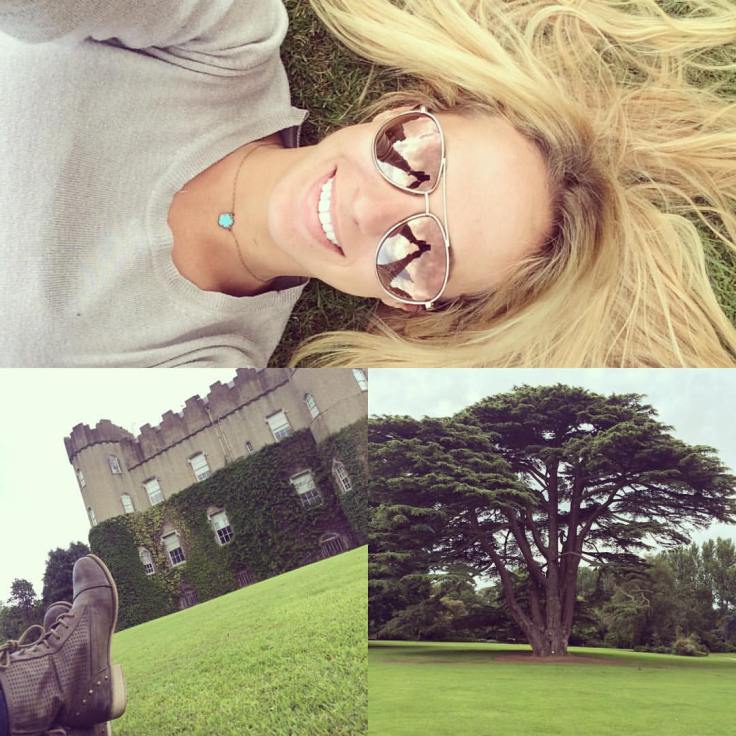
We then went on a guided tour of the house. My two favorite facts from the tour are the following:
1- This carving of the Virgin Mary mysteriously disappeared once the family left the house following the British invasion, yet reappeared once they took their rightful home back. Some say they simply removed it and took it with them so that Cromwell’s army would not destroy it, but others say it reappeared by magic!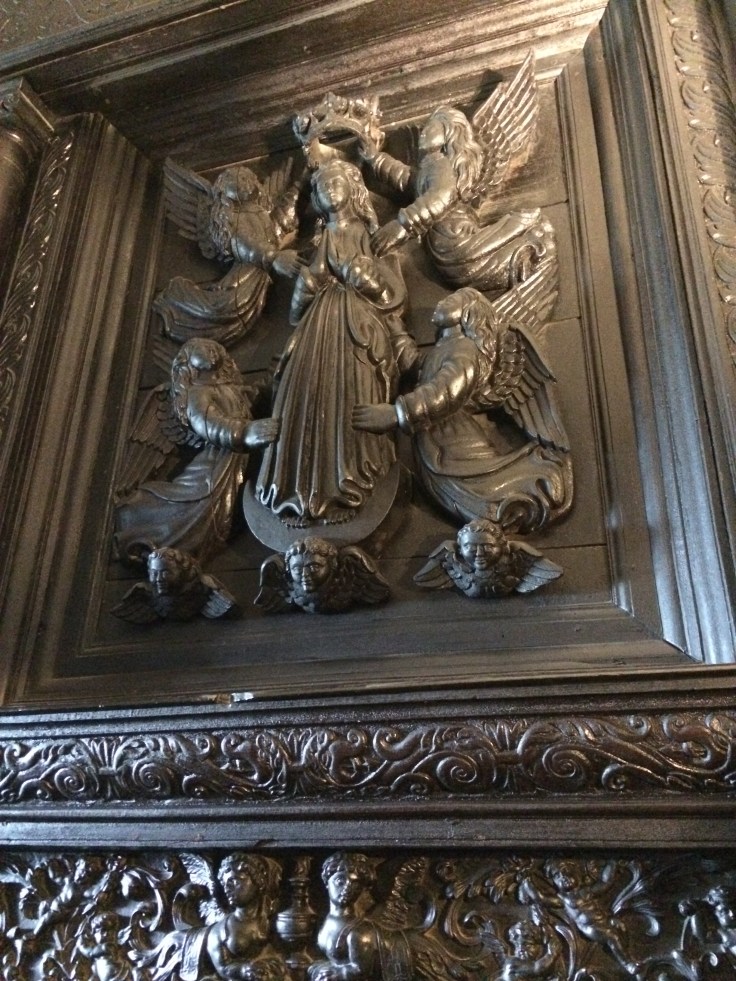
2- This tiny door was used by Puck (yes, like A Midsummer Night’s Dream!), the family jester who would entertain parties in the dining hall. One legend says he died of a broken heart after an unrequited love interest in a Talbot lady, and another legend says he hung himself after the family lost the castle following the Battle of the Boyne as he hated the new British tenants so much.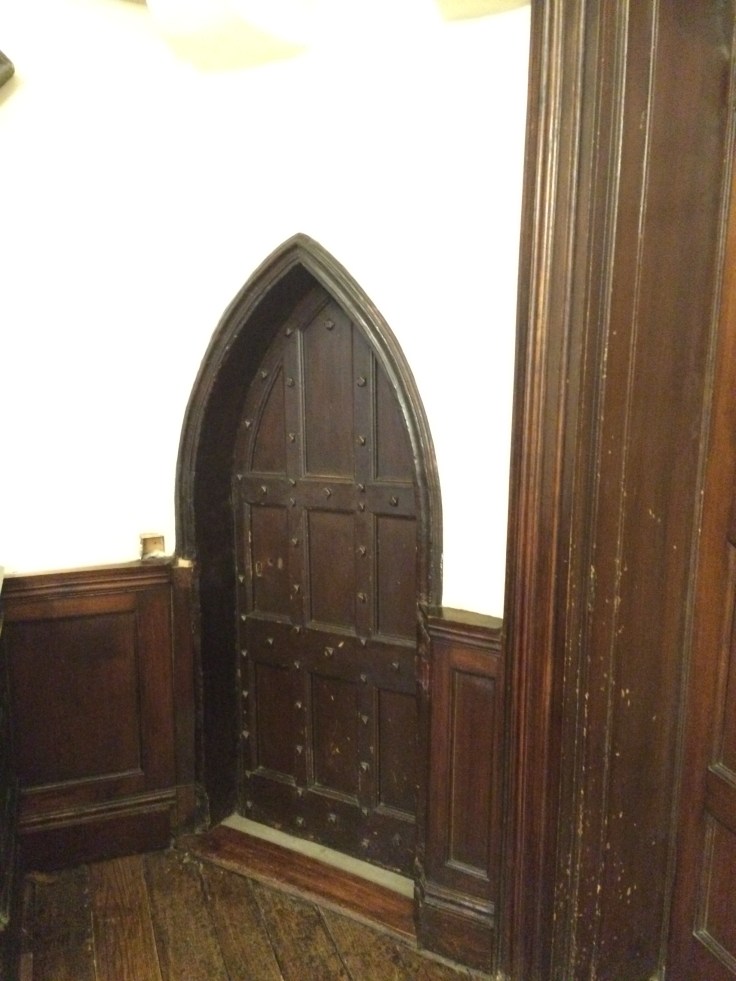
After exploring Malahide, we drove down to the fishing village of Howth to pick up some freshly caught fish for dinner. We also grabbed some delicious coffee and desserts while here. It was such a cute part of Dublin and I think I’d want to live here if I ever moved here! 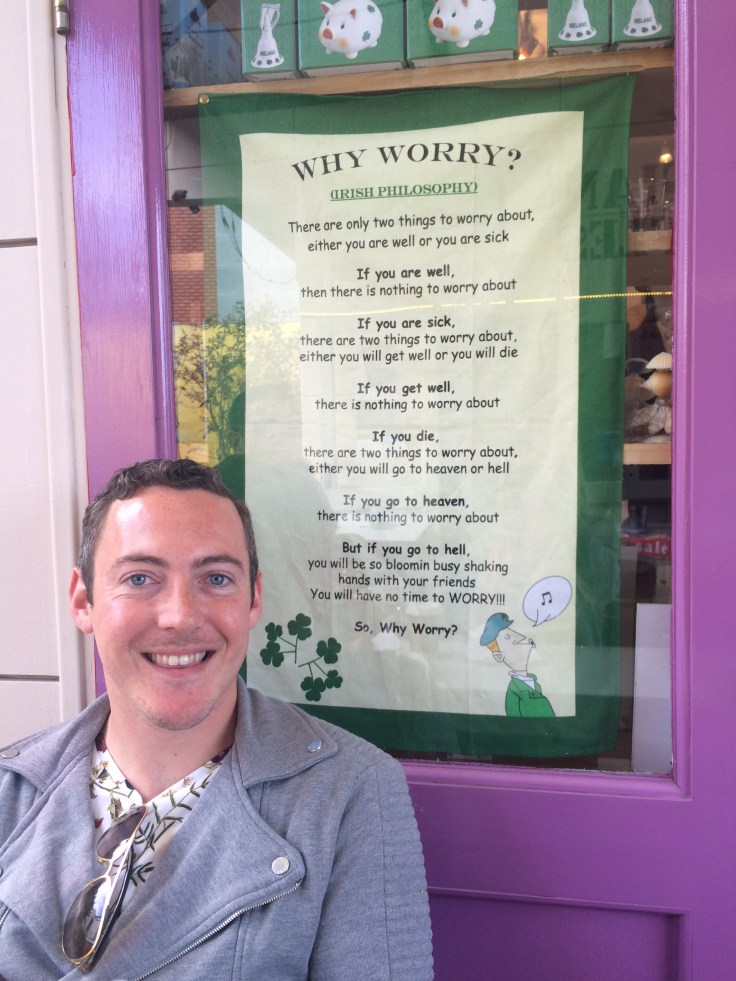 On the way back in, we also stopped by Michael’s childhood home just outside of Dublin and the locally-owned grocery store where his brother works…it was so nice to meet more of his family!
The next day, I took a bus into the city center on my own, as Michael was flying to Madrid for work for the rest of the week. The city was not the same without him!! 😦 I am so grateful for his amazing generosity as a host (and for Joe’s hospitality as well…he made me dinner! 🙂 ) I spent the day reading a book (We Are Called to Rise by Laura McBride) and exploring coffee shops and pubs, and went to bed very early.
The next morning, I embarked on a 3-day Shamrocker tour of the southern countryside of Ireland. The trip got off to an exciting start when our bus broke down!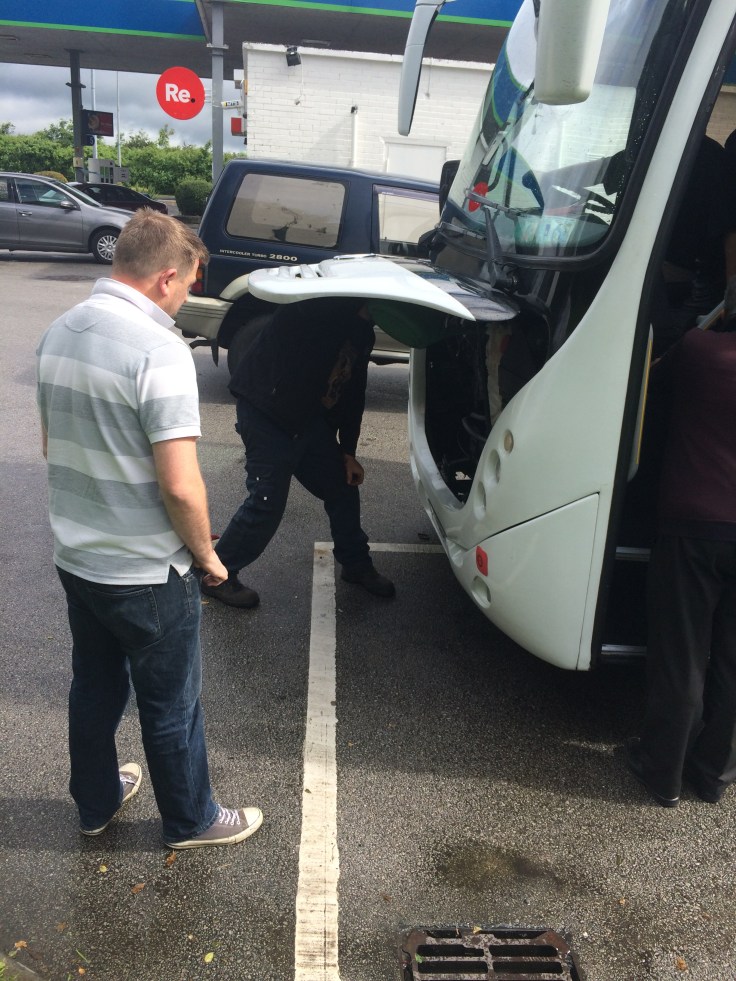
After an hour, we were on our way again, and our first stop was in the town of Galway. It is Ireland’s third largest city with a population of 70,000! I enjoyed walking around and shopping, and I found a neat souvenir. My bracelets from Zimbabwe had finally broken a while back, so I replaced them with this one. 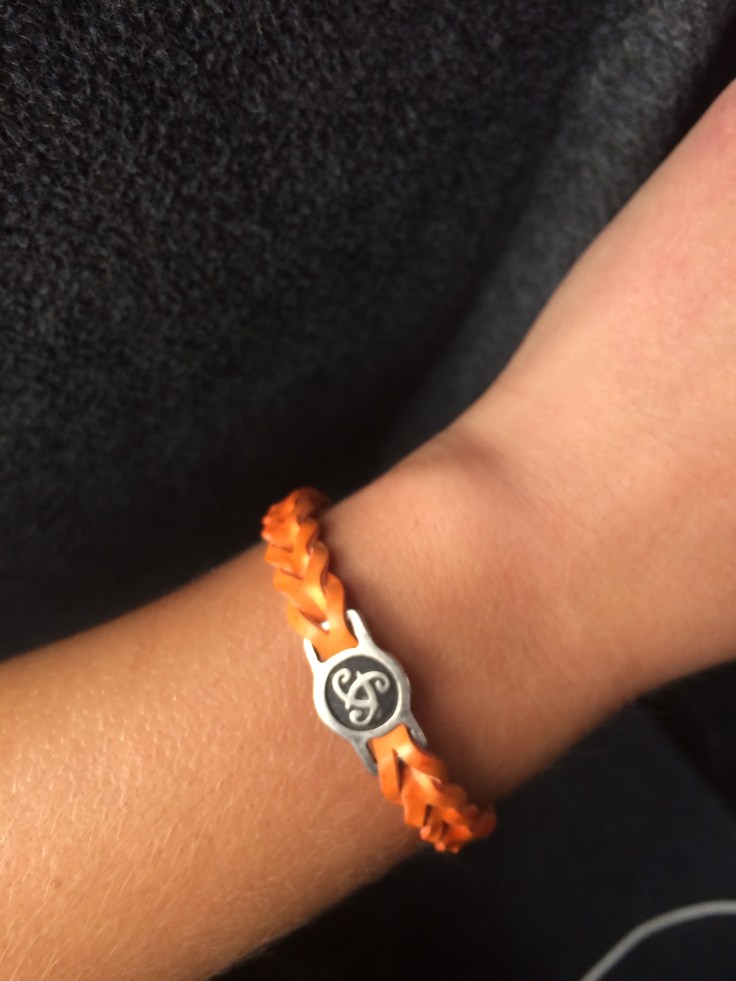 This Celtic symbol is the Four Spirals, and it represents the “goddess” completing her path in life. The large spiral itself is the Goddess, and each of the smaller spirals are the Maiden, the Mother, and the Crone (I’m guessing this means old age!). The center disc is a cauldron where “divine knowledge and inspiration” are brewed. Maybe it is a bit cheesy, but I love what this represents and I feel this trip this summer is very relevant to me completing my own spiral of life. 🙂
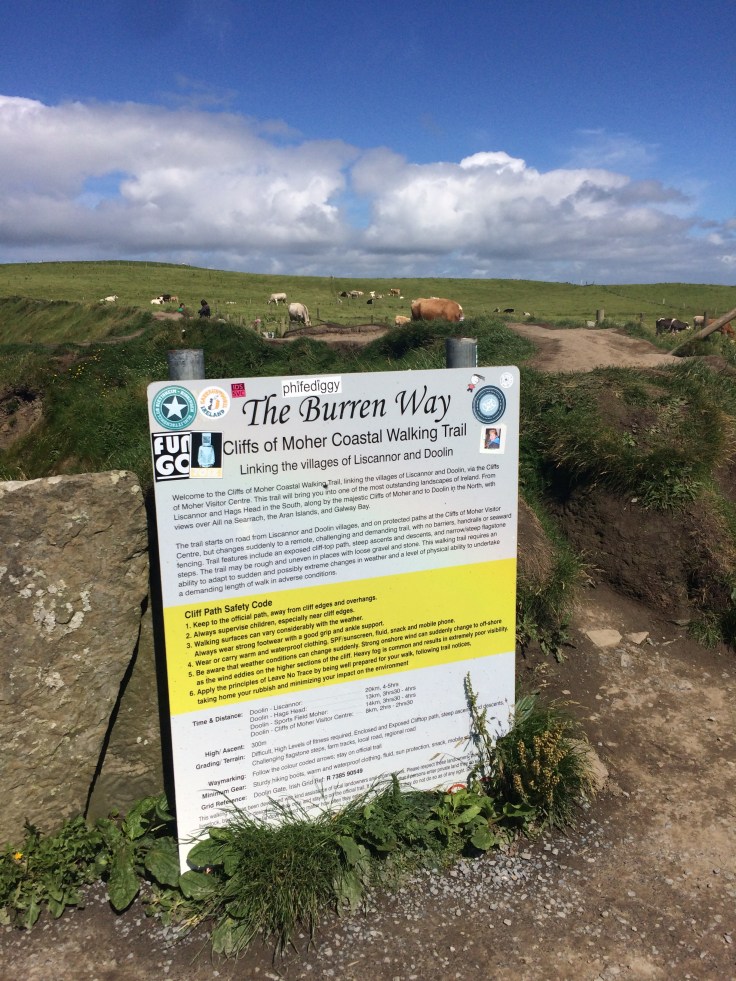
After Galway, we made our way to the beautiful Cliffs of Moher, stopping along the way a few times to soak in the breathtaking scenery. The Irish countryside is every bit as stunning as I imagined it would be and more.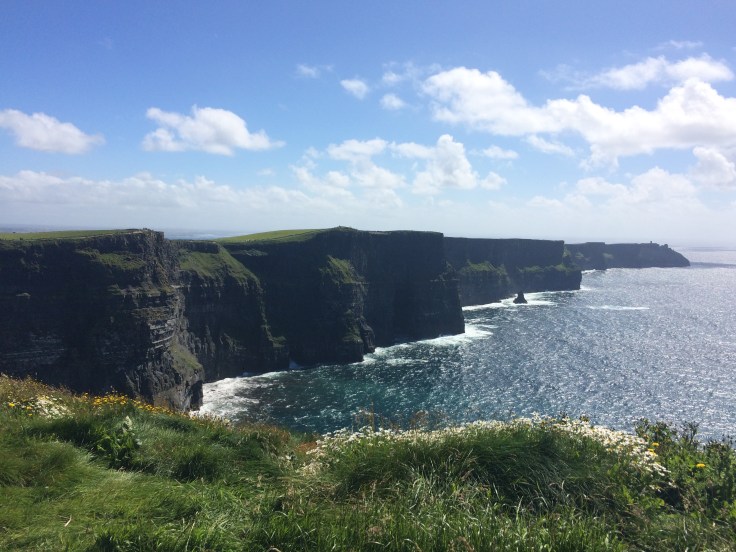


 Along the way, our tour guide told us more about the history and culture of Ireland, ranging from the light-hearted to tragic. The funniest thing he told us about were “fairy trees.” Often, there is a lone tree in the middle of a field of cattle or sheep. The local farmers are too superstitious to cut the trees down, as the fairies supposedly live in these lone trees and to cut them down is to bring bad luck on yourself! He gave us a few true examples of what happens when you mess with the fairies…I think it’s safe to be cautious!
The saddest thing I learned about had to do with the random walls lining the fields as we drove past. These are known as “famine walls” and were constructed for no reason other than to give starving Irish people a way to “earn” their food during the Potato Famine of the 1840s. People often died while struggling to build these extraneous walls, and the taskmasters forced their kin to bury them in shallow graves as they continued working on these meaningless walls. 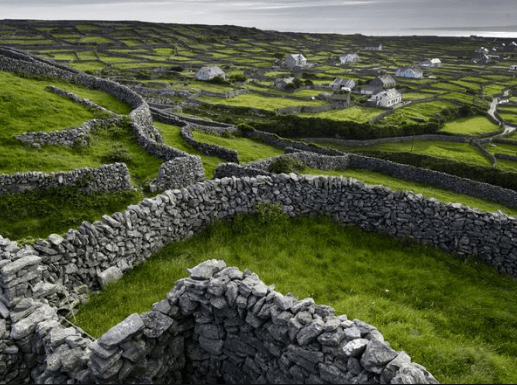
Perhaps the most shocking thing I learned was that the Potato Famine did not occur because of a lack of food. Although the potatoes were blighted, crops such as oats that continued to grow successfully were exported to Britain while the Irish people starved (keep in mind this occurred while Ireland was still occupied by Britain). The population of Ireland dropped 25% during this time, with 1 million Irish people dying from starvation and millions more from trying to immigrate to America, Canada, or Australia (if you left Ireland for Australia at this time, you had a 50-50 shot of surviving the boat trip).
Despite the deep sadness of Irish history, I continue to be impressed by how happy and spirited the people and culture are. Once we arrived in Ennis for the evening after visiting the Cliffs of Moher, our group had dinner together and then visited a pub that had amazing live traditional music! Over half of the group are from South Africa, and I’ve enjoyed re-learning some of the Afrikaans I’ve forgotten since my visit there in December 🙂 I’m looking forward to a few more days traveling around this green and rainy country, and getting into more craic (Gaelic for “fun”) along the way!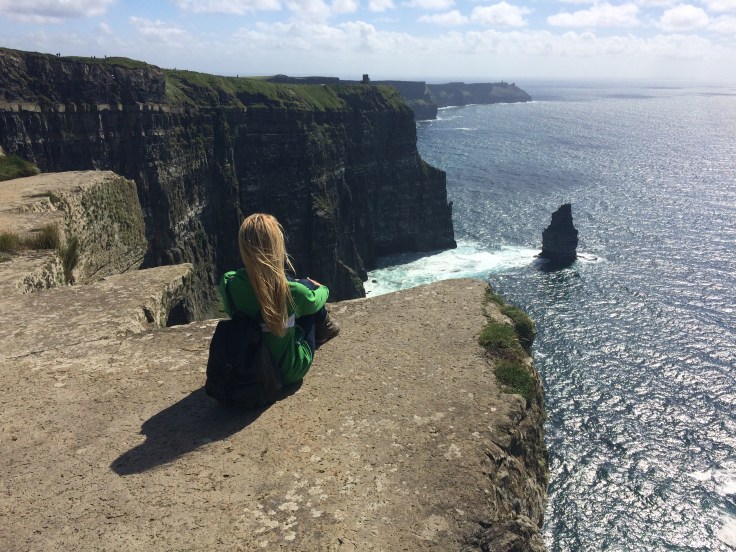
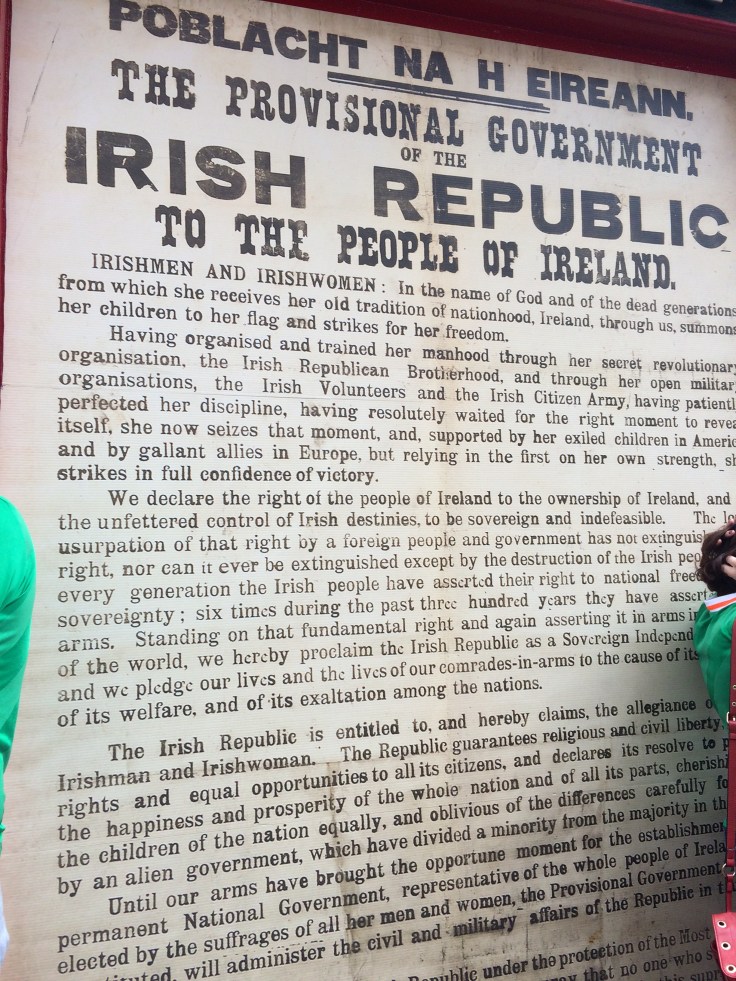 Even though I am across the Atlantic, I have felt perfectly at home in Baile Atha Cliath (“Dublin Town” in Gaelic). Perhaps it is due to coming away from a rough (but fun!) 3 weeks in South America, but I feel like I have had time to fully recover and enjoy myself here already. And I still have almost a week left here!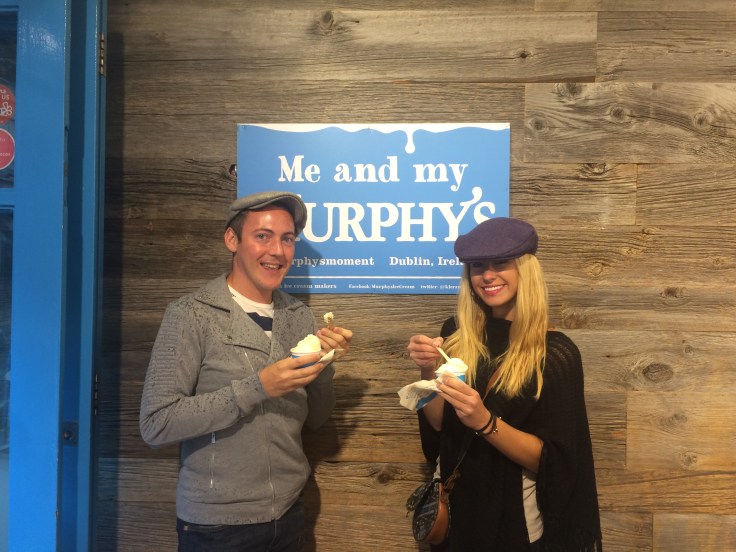

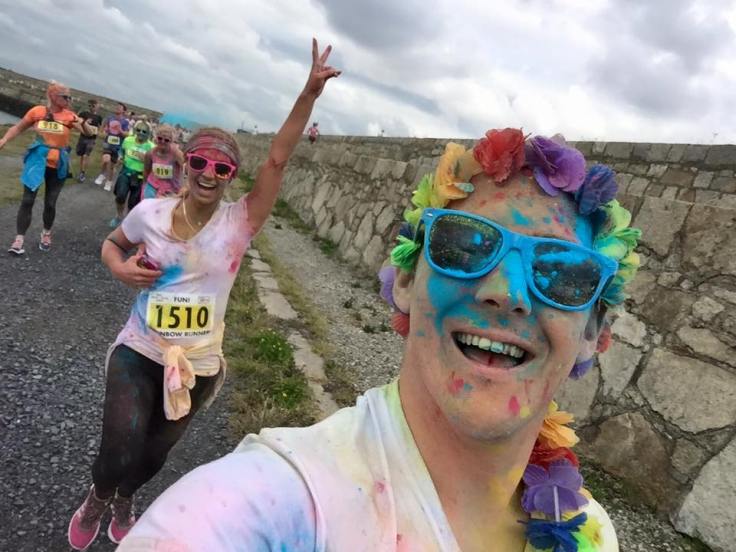
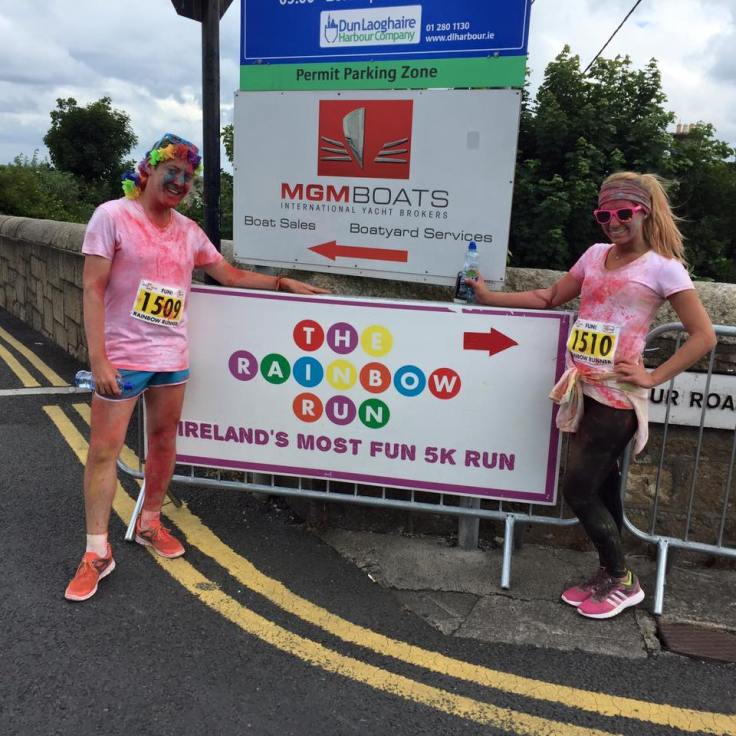
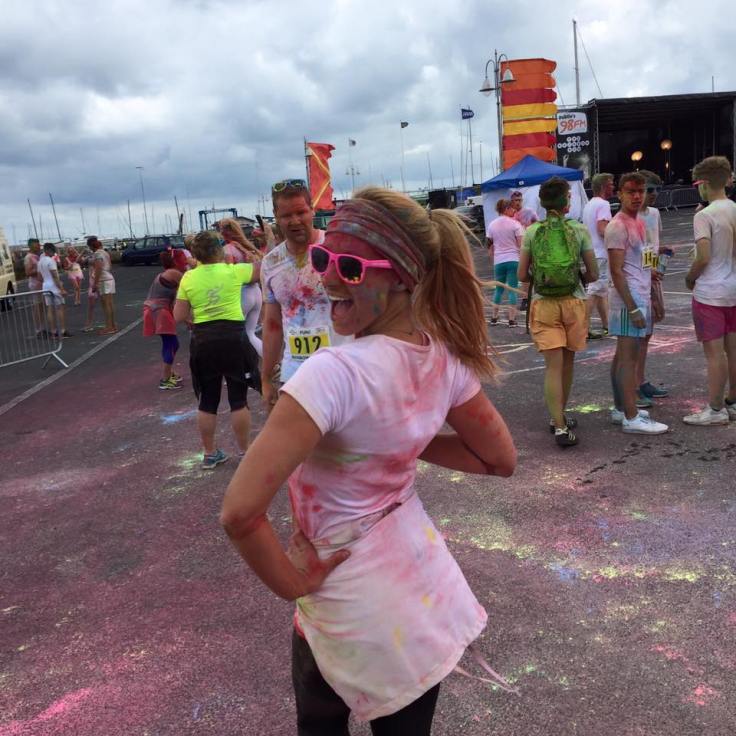



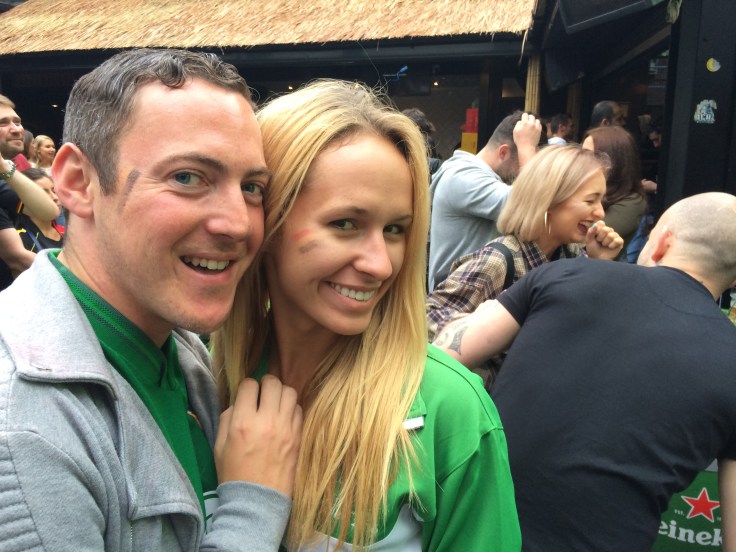
 Although the LGBT community has made strides toward equal rights across the world, there is still so much work to be done, especially in the US. In particular, there are 32 states that still do not have fully inclusive LGBT non-discrimination laws. Then, there are some states like Mississippi and North Carolina which have passed actively discriminatory laws toward the LGBT community. Yesterday, I was reminded that we all need to work together to ensure equal rights for all. LGBT issues are not just a “gay community” issue– they are human rights issues. As MLK once said, “Injustice anywhere is a threat to justice everywhere.”

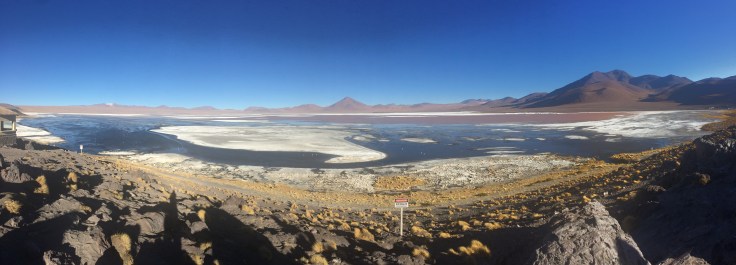 Three simple words describe the last three days–cold, dirty, and fun. Sarah, Rachele, and I have been on a tour through southwest Bolivia, including the Salar de Uyuni and the Eduardo Avaroa Andean Fauna National Reserve. This is the first time on this trip where I have been completely disconnected from the outside world–I’ve had no cell service or internet access for the last three days! Most hostels, bars, and restaurants have wifi, no matter where you are in the world (yes, even in Zimbabwe back in December!). However, I’ve finally found a place in the world without wifi, and it’s Bolivia.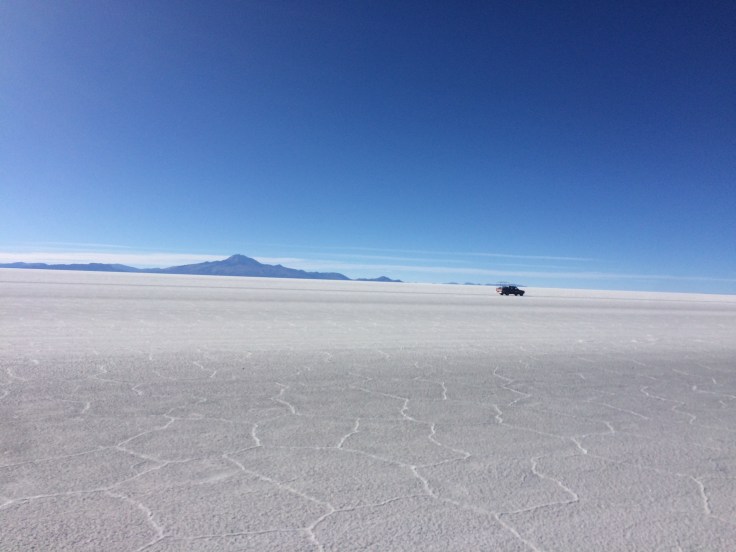
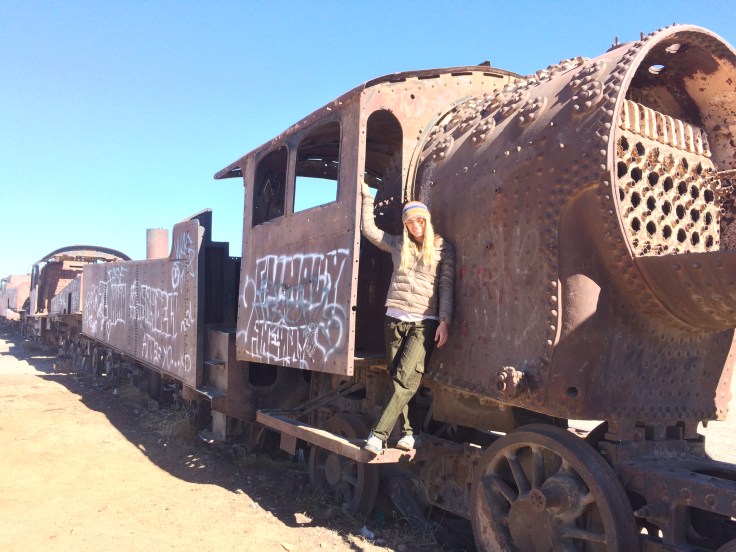
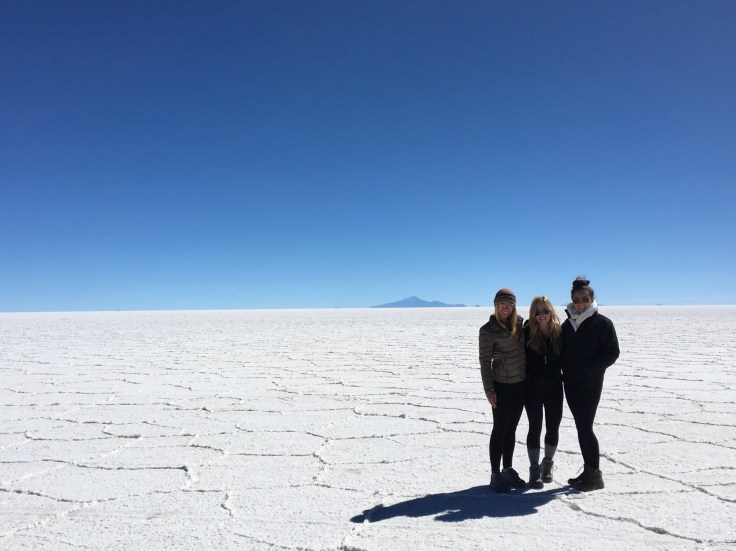
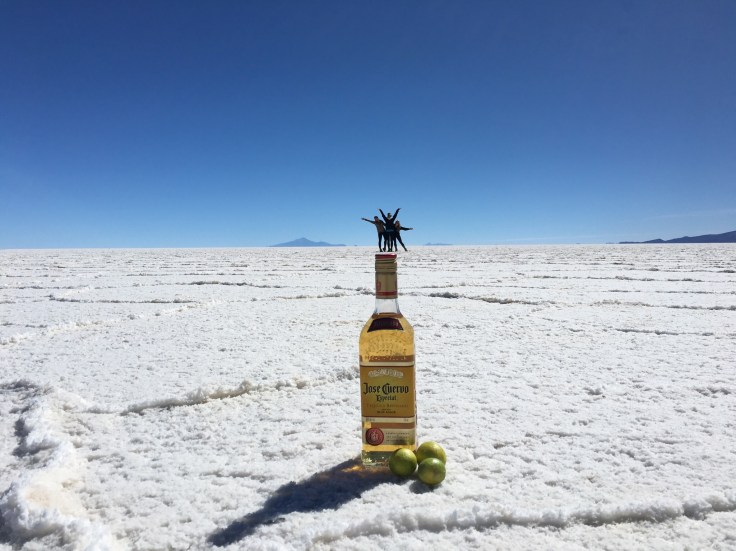
 We then traveled to Dakar, a small settlement on the flats, where we had lunch and visited the flags outpost.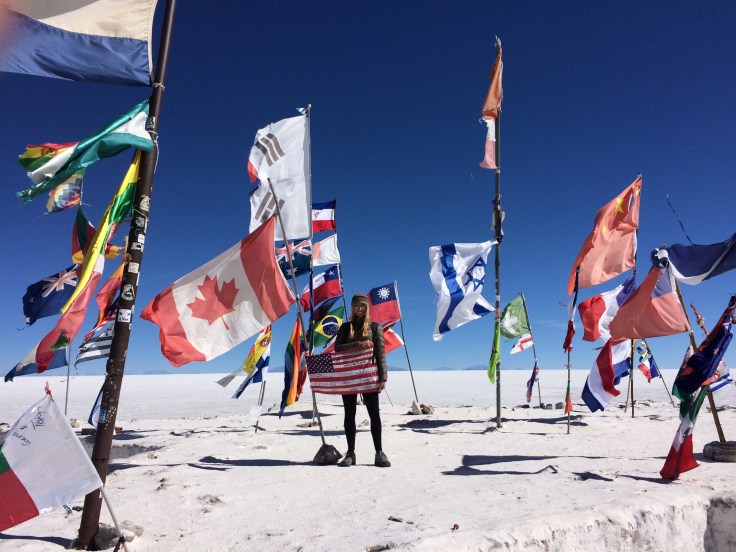
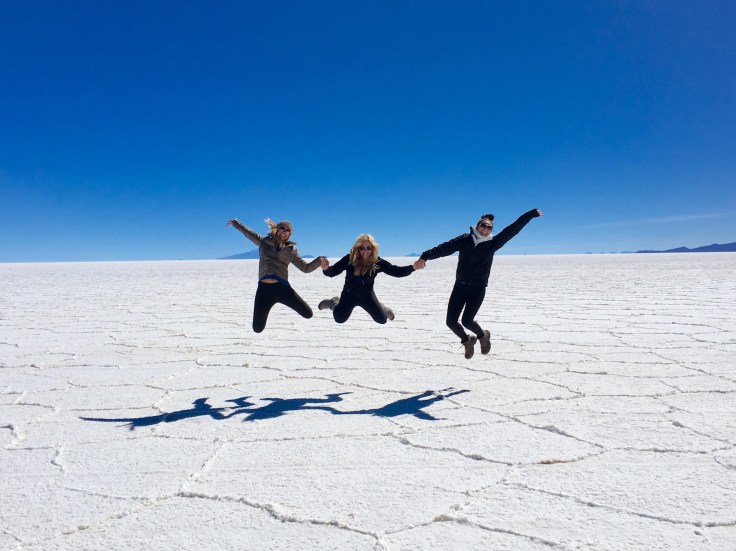
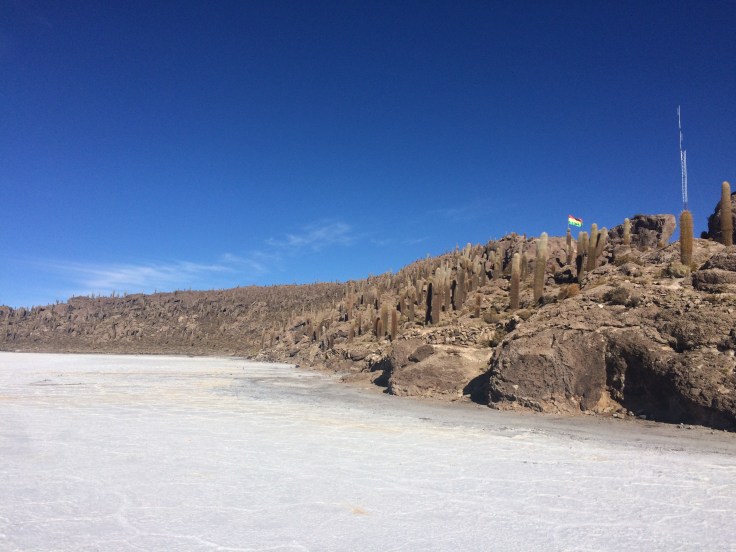
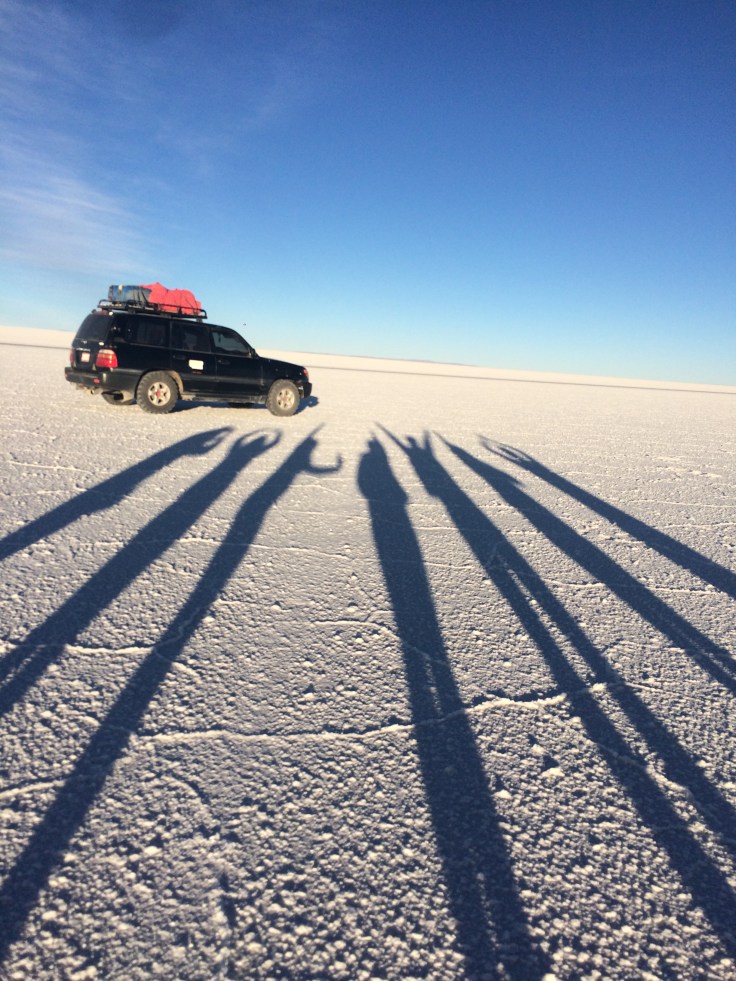
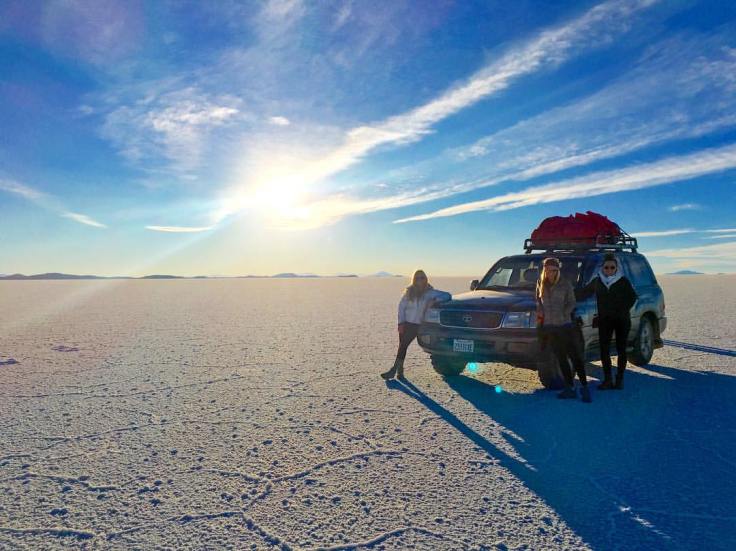 By the time the sun was setting, we were just leaving the salt flats. After about 2 hours, we reached our accomodation for the night–a “salt hotel!” The salt hotel was basically a structure constructed out of blocks of salt, with the bed frame and dining tables and chairs also made out of salt. The floors were simply covered in loose grains of salt, like sand. There was no heat, but it did have electricity and running water. As the temperature had dropped below freezing, we all bundled up then enjoyed our salt family dinner together, along with some wine we had picked up in a small store along the way.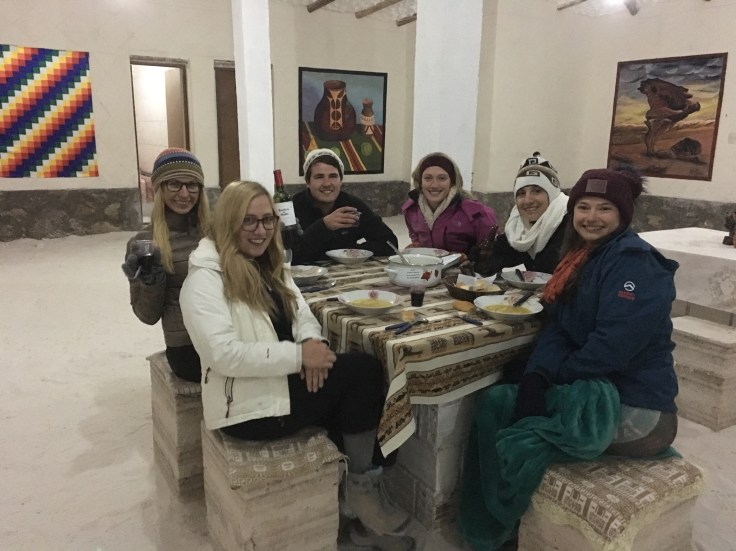
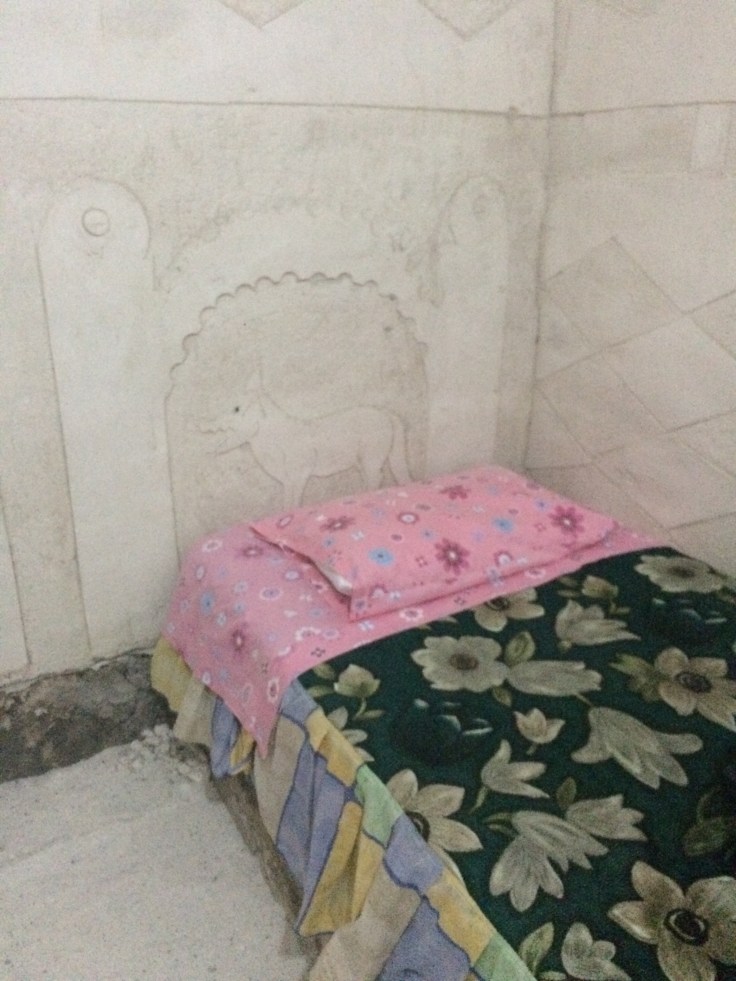 We all voted unanimously we’d rather be dirty than cold, so we skipped the showers and just enjoyed the unique environment! Also, the view of the stars and the nearly full moon from our outpost was brilliant.The last time I saw “estrellas” (stars) this bright was in Africa, and I felt very happy to be in the wild with them again!
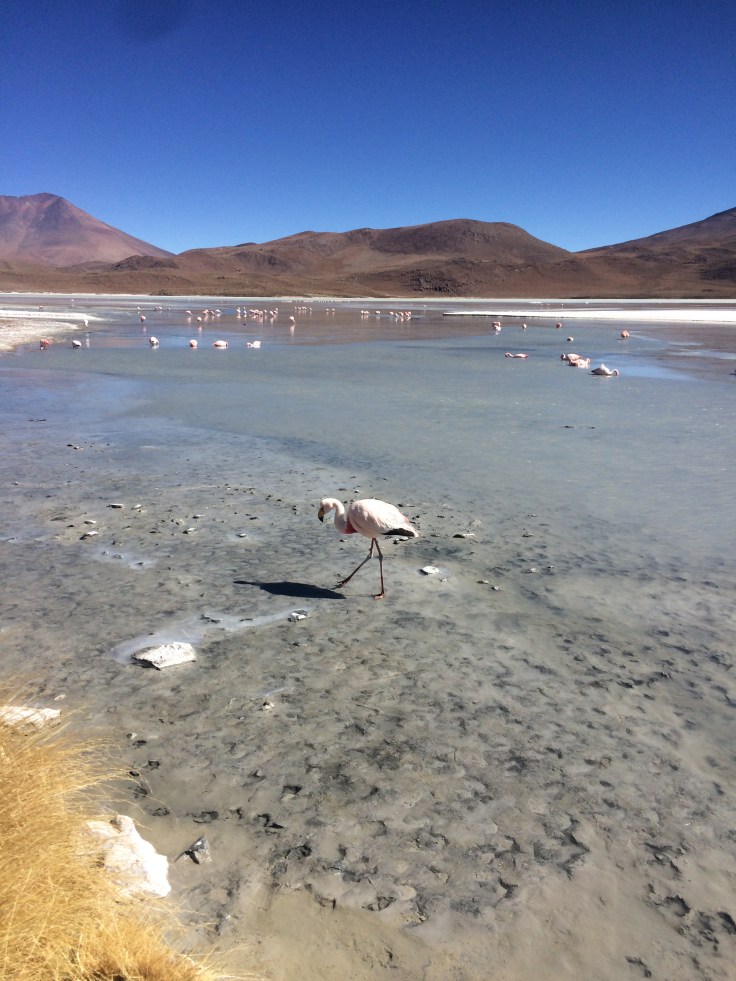
 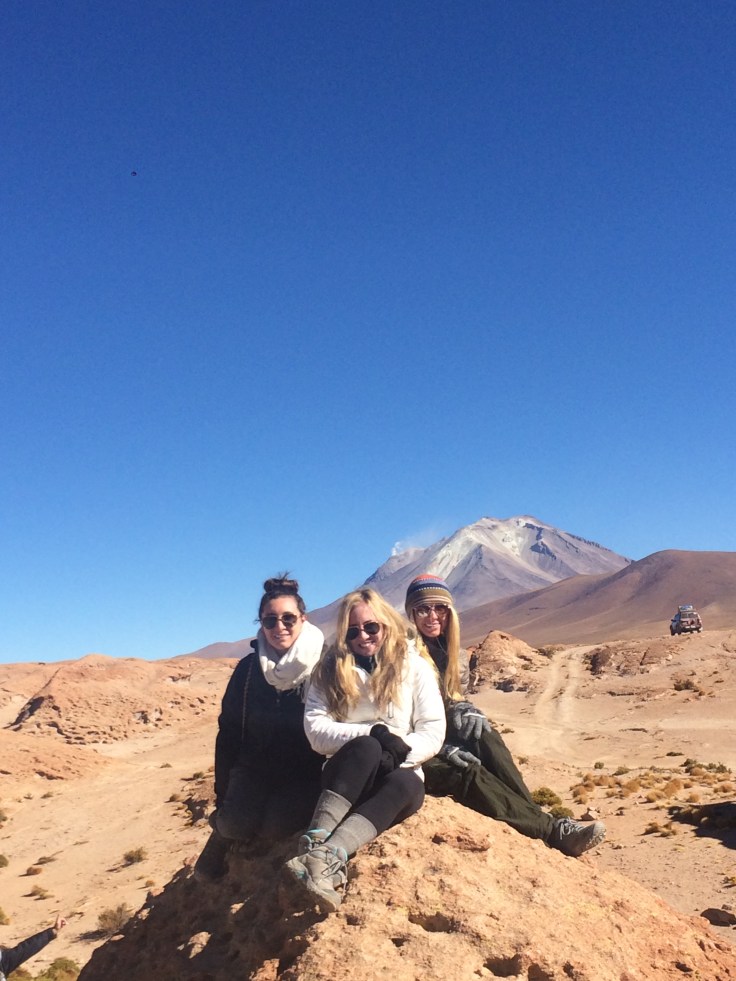 We also stopped at several lagunas, where I was shocked to see a large number of flamingos. I always assumed flamingos lived only in tropical and warm environments, but here these were, wading through the icy water just hanging out!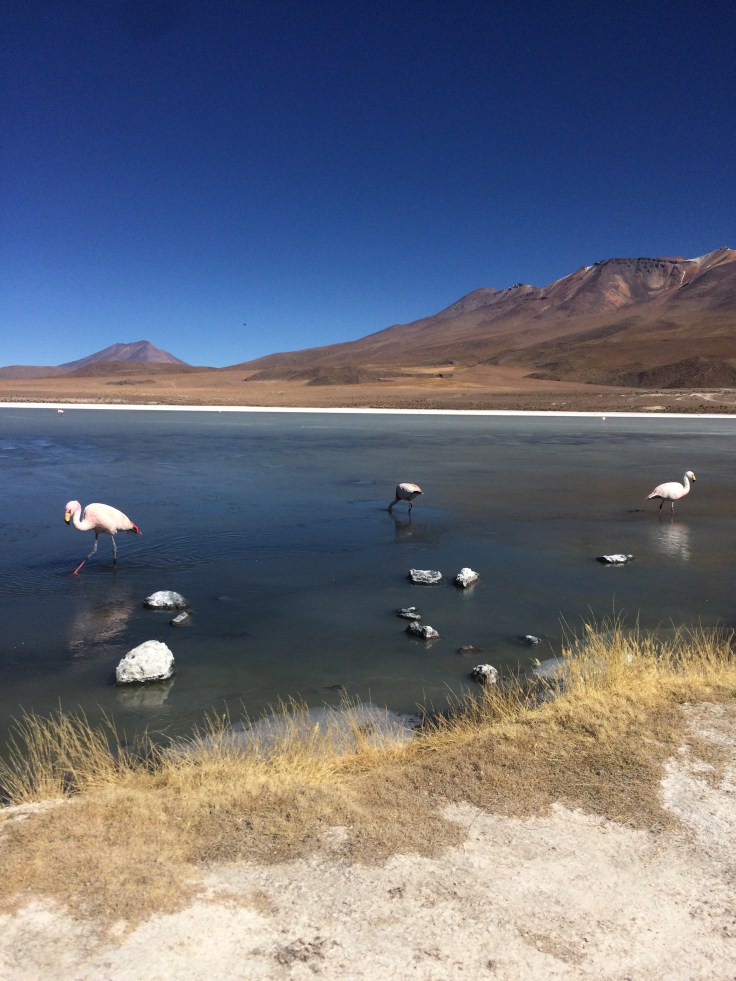
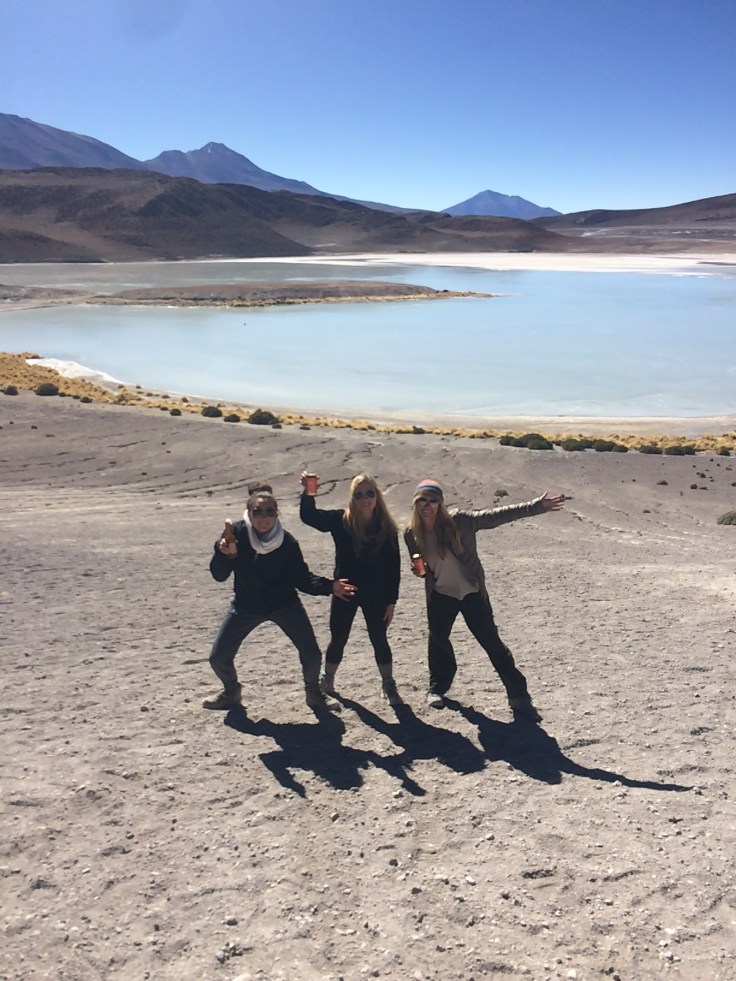
 After a stop for lunch, we decided to have a dance party at the Laguna Honor.
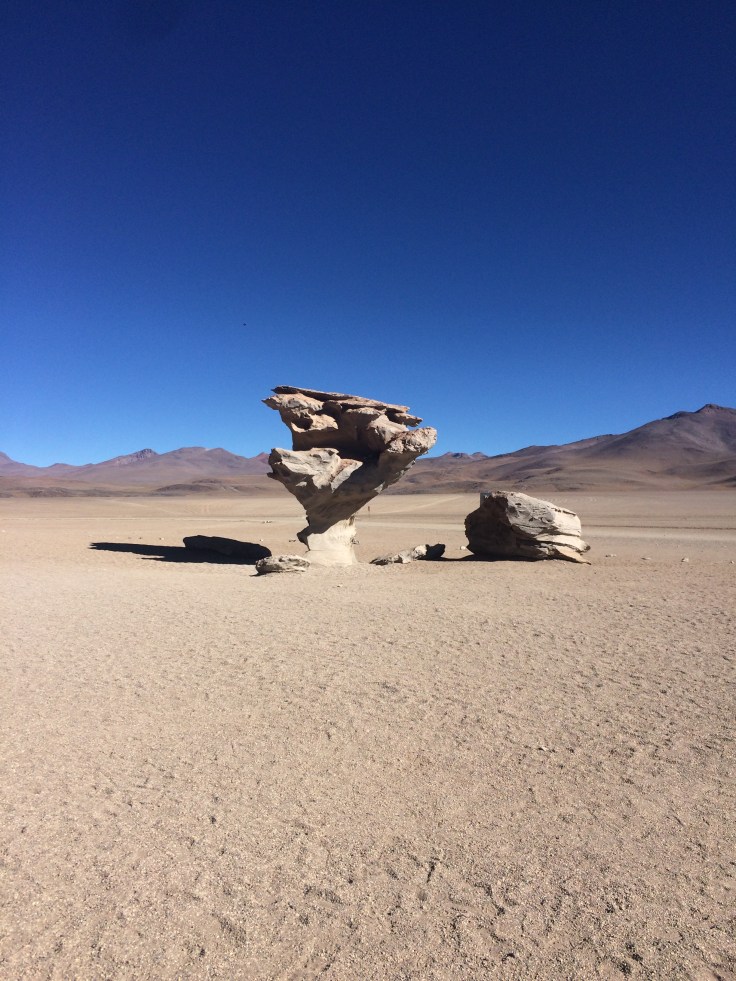
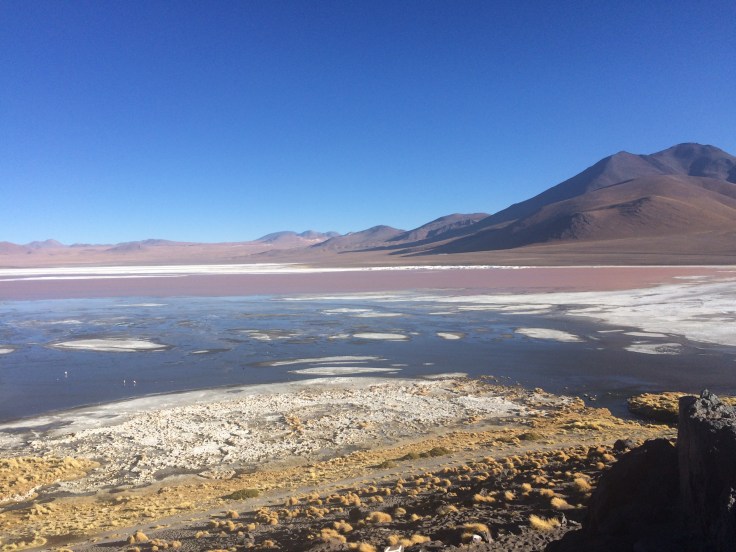

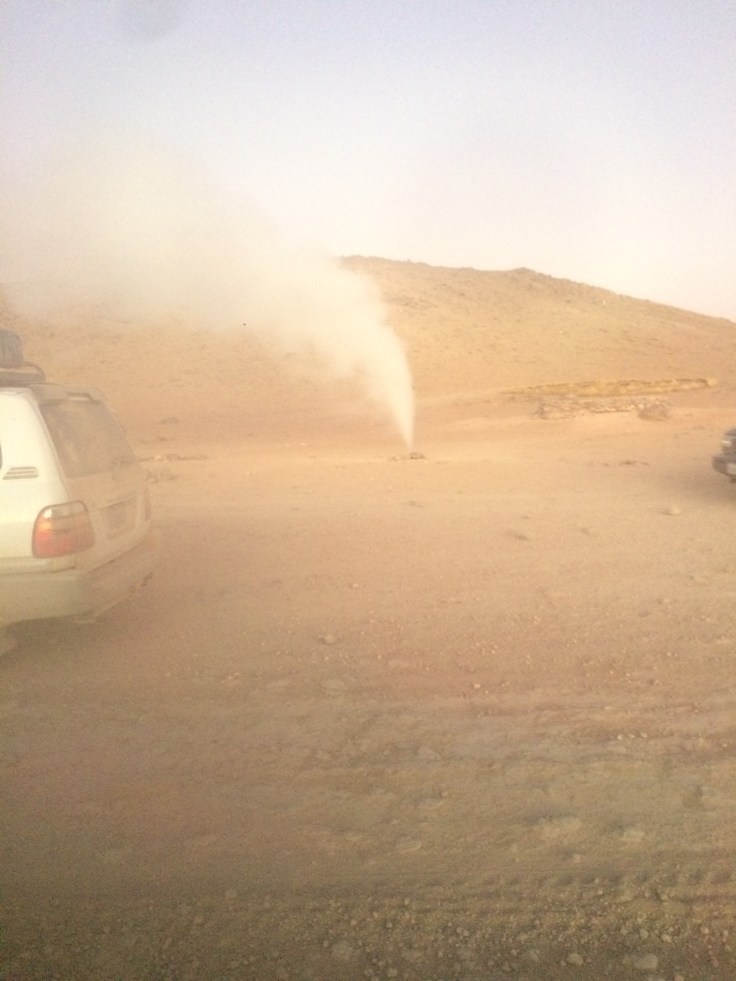 We then continued on to some natural hot springs and the Laguna Verde, near the Chilean border, before driving the 8 hours back to Uyuni, making some small stops all the way. We were all very exhausted from the cold and ready for a shower at this point!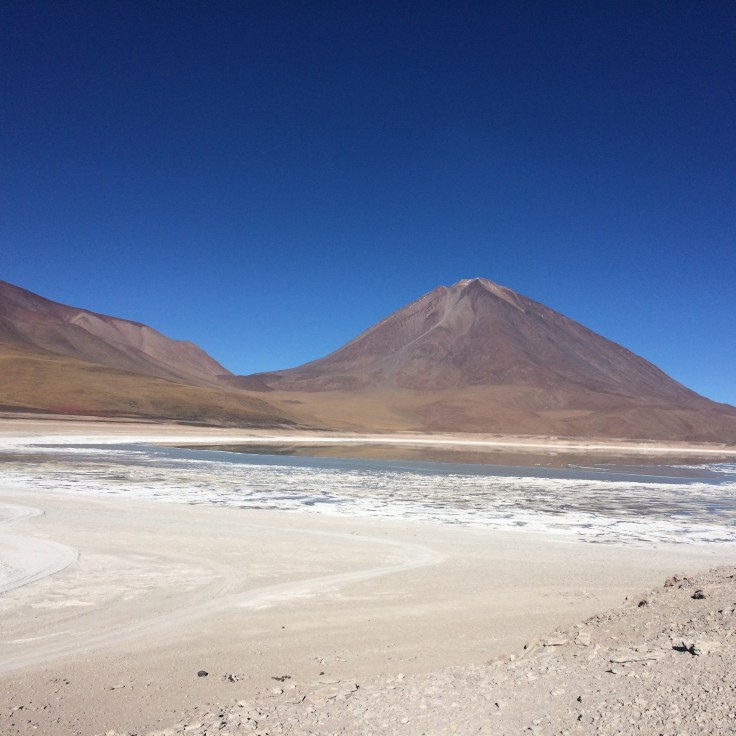


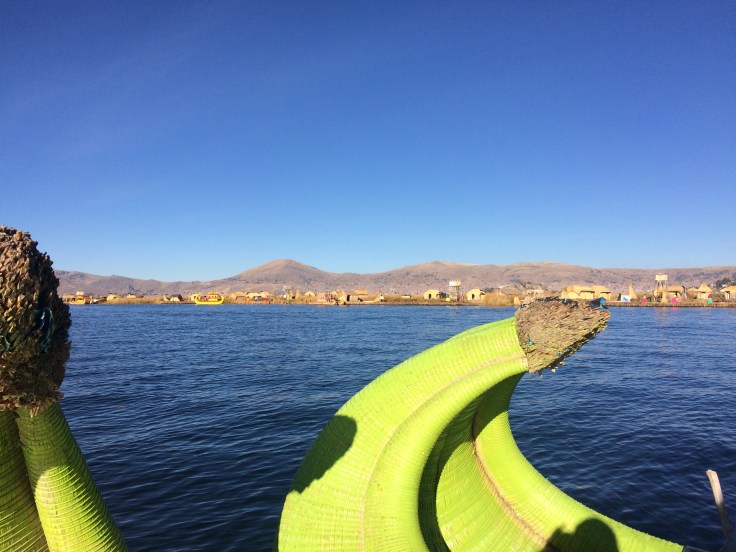

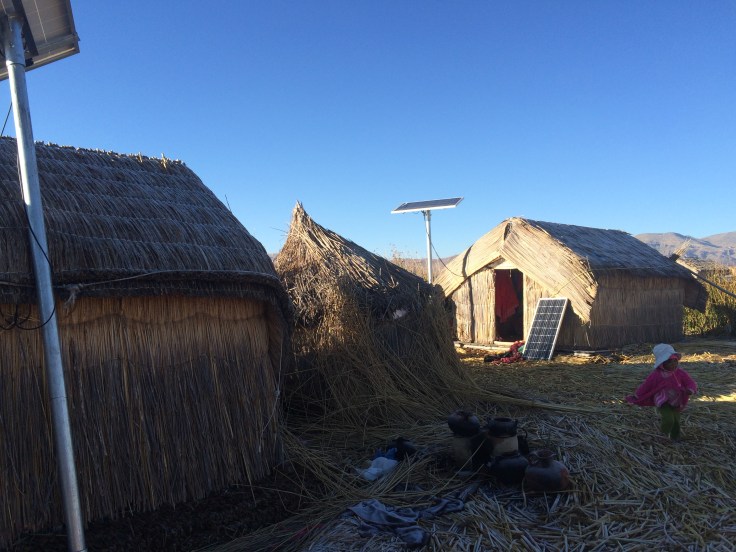
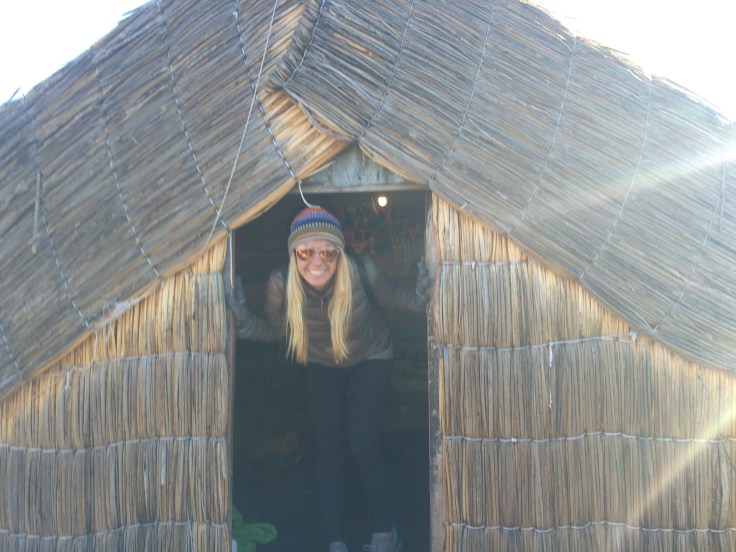
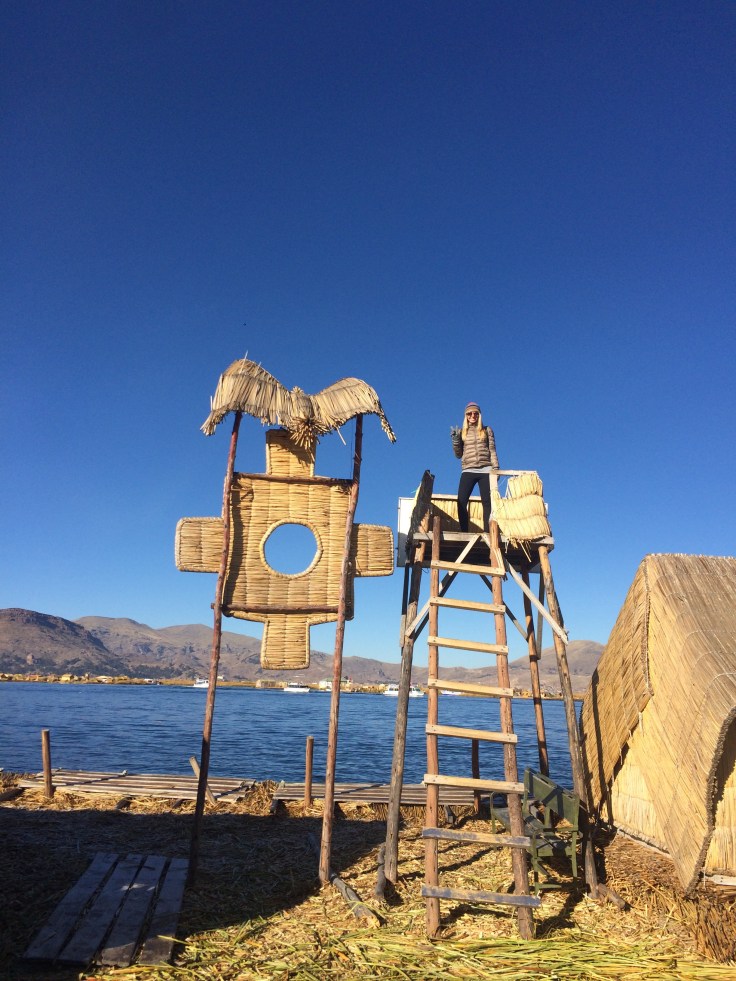
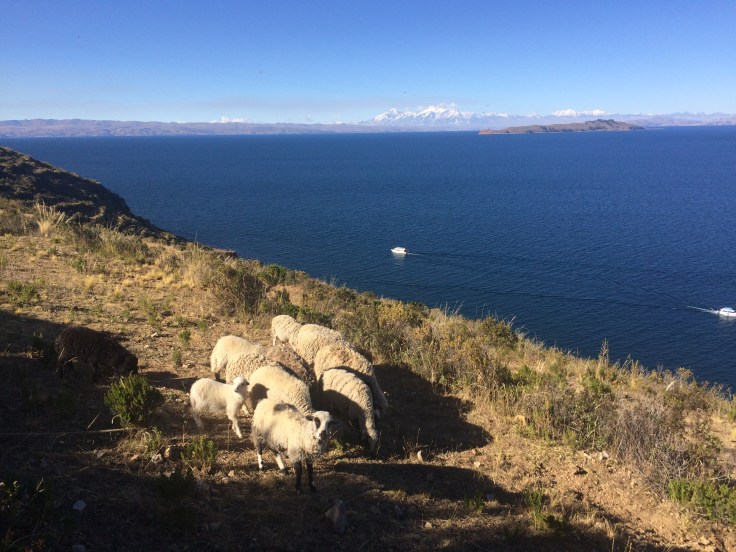
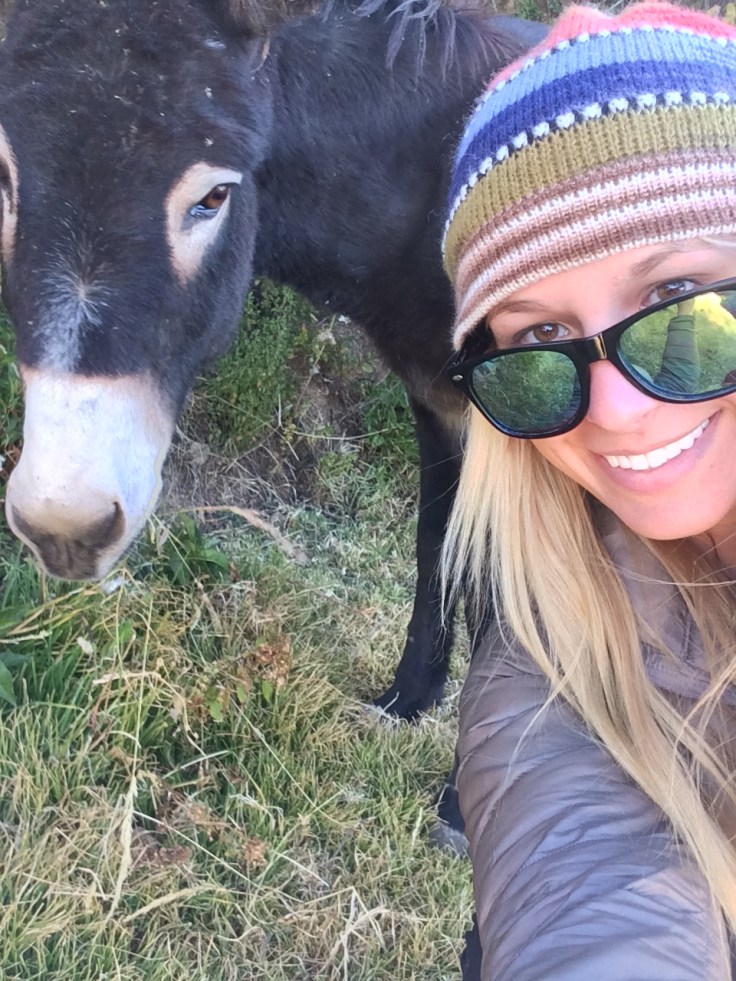
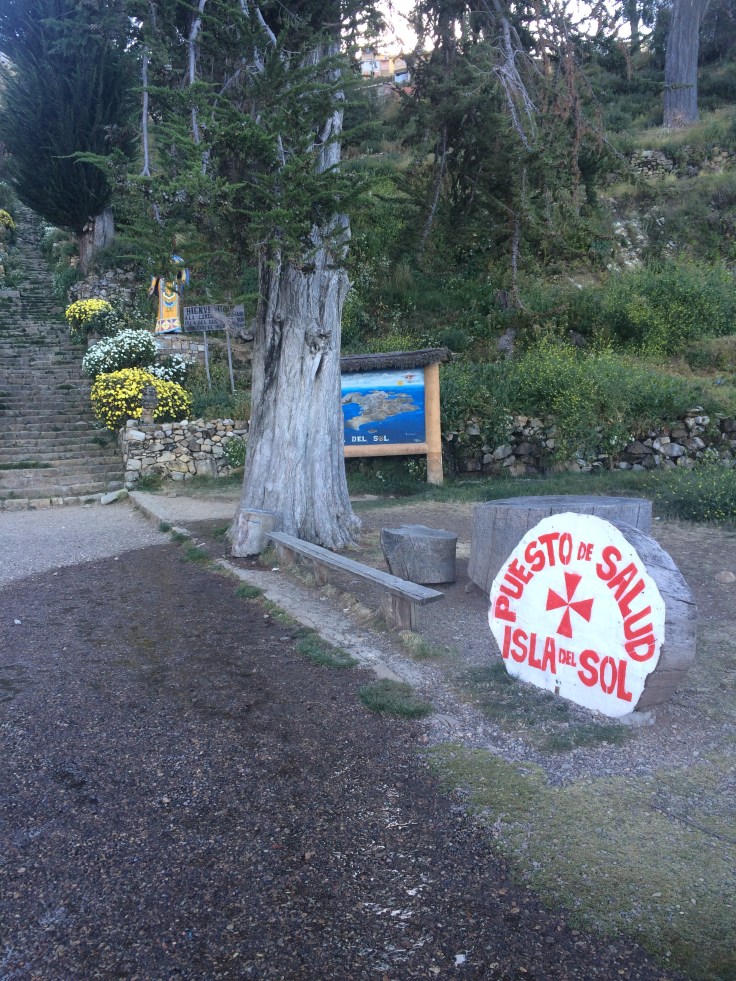
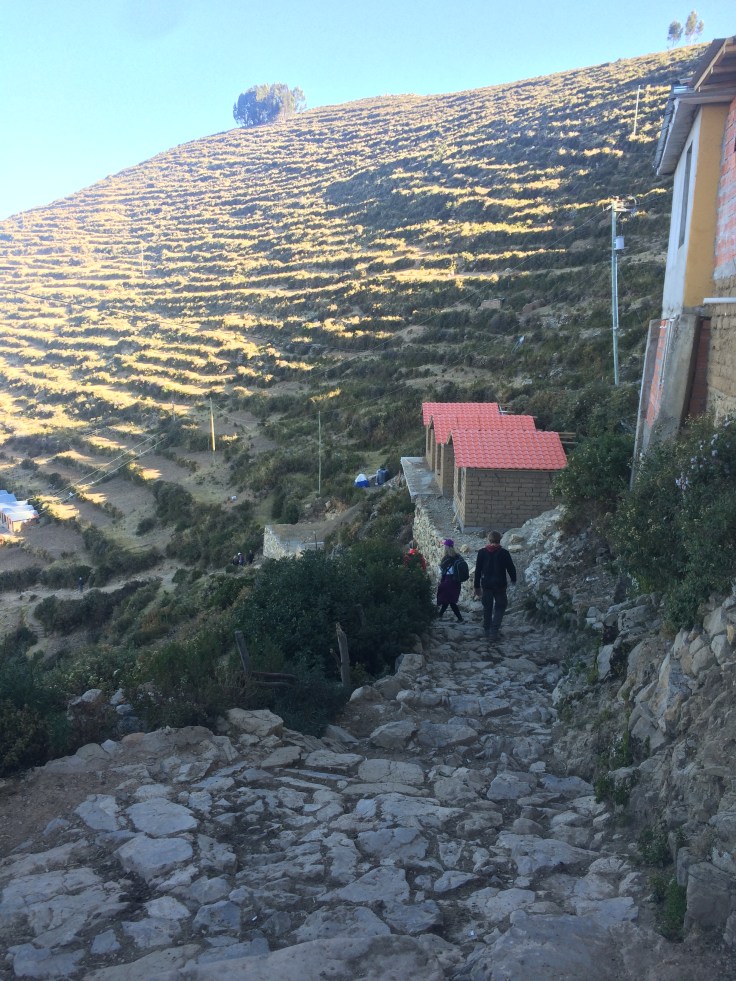 After our short trek across Isla del Sol, we boarded our boat again to make the 1.5 hour journey back to Copacabana. We then boarded the bus, and drove the 4 hours to La Paz, the capital of Bolivia. The ride was exciting for 2 mains reasons–1) At one point, we had to get off the bus and ride a small motorboat across a Lake Titicaca tributary, while our bus floated by on a ferry. We then reboarded on the other side. This experience was unique and fun, but made me appreciate bridges all the same. 2) We watched one of my favorite movies of all time on the bus ride–Interstellar!! Yes, I am not ashamed of my nerdiness.
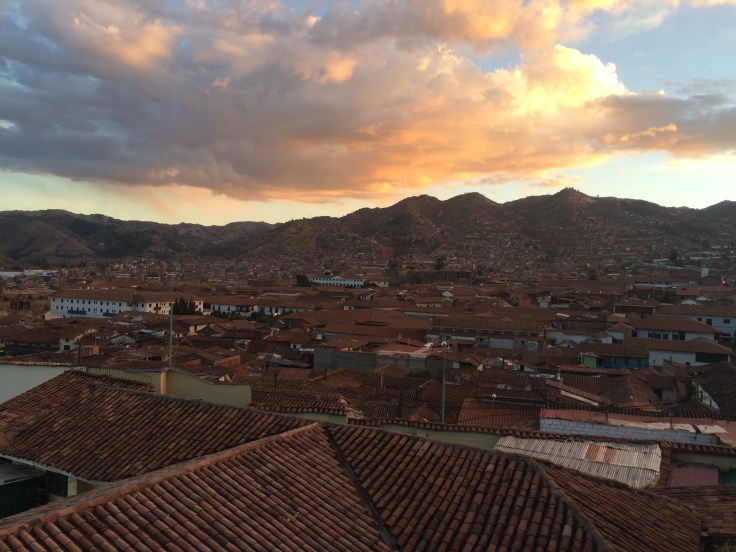
 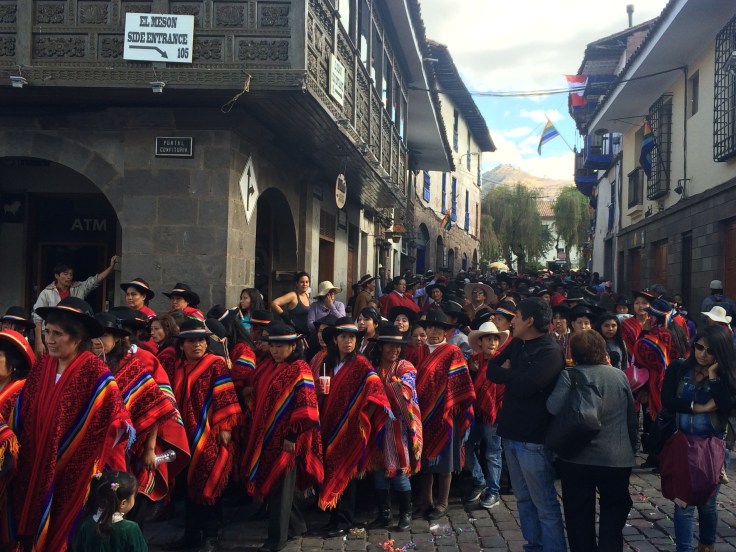 Our tour guide, Angel, was exceptional. He explained to us how Cusco was the center of the Incan world, and how the roads delineate the four regions of the Incan empire, stretching into modern Colombia, Chile, and Bolivia.
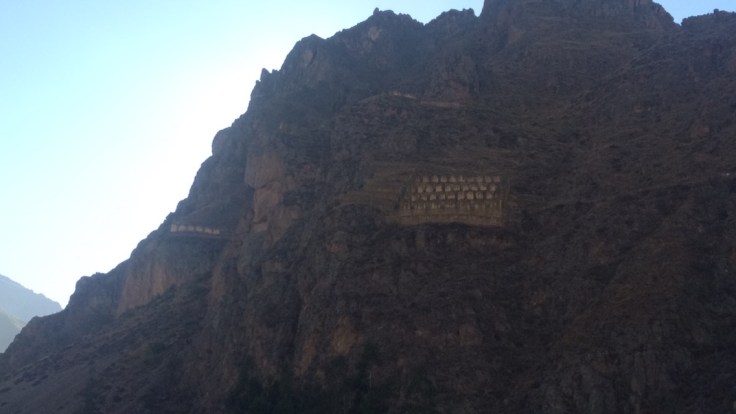
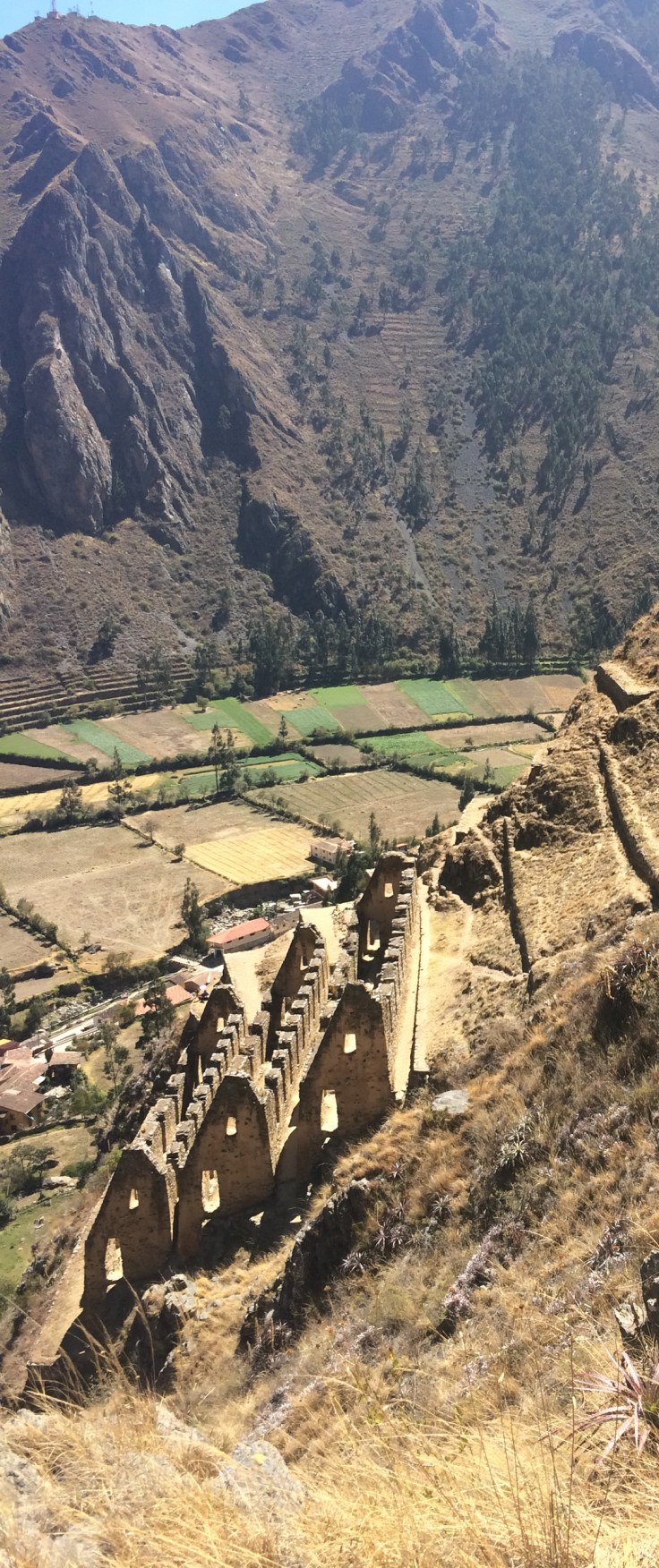
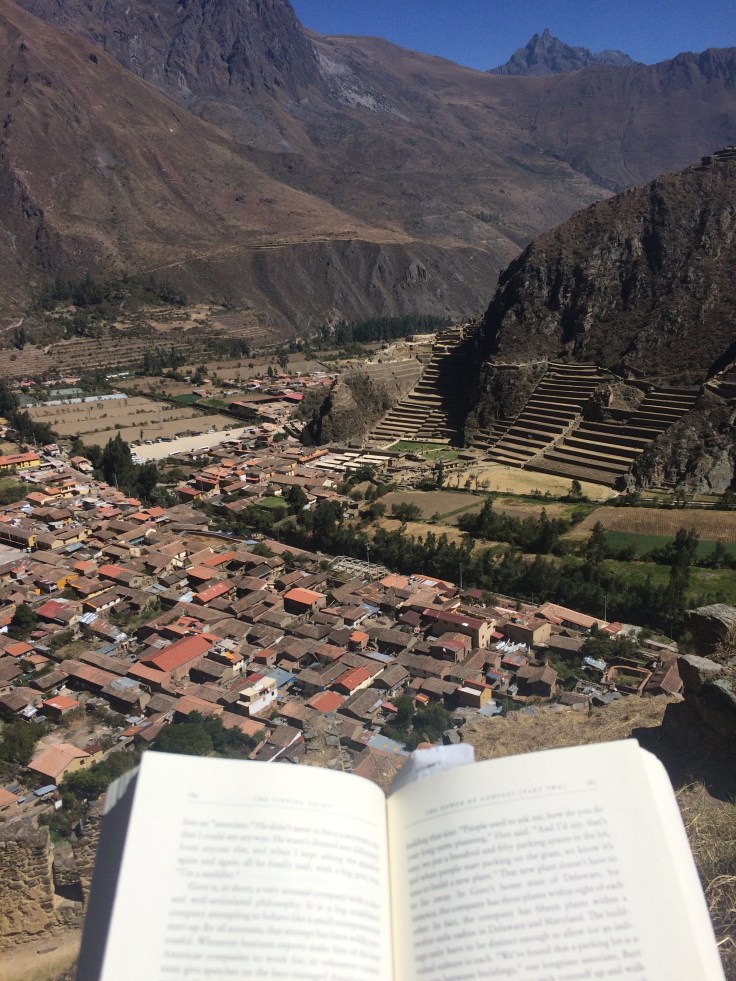
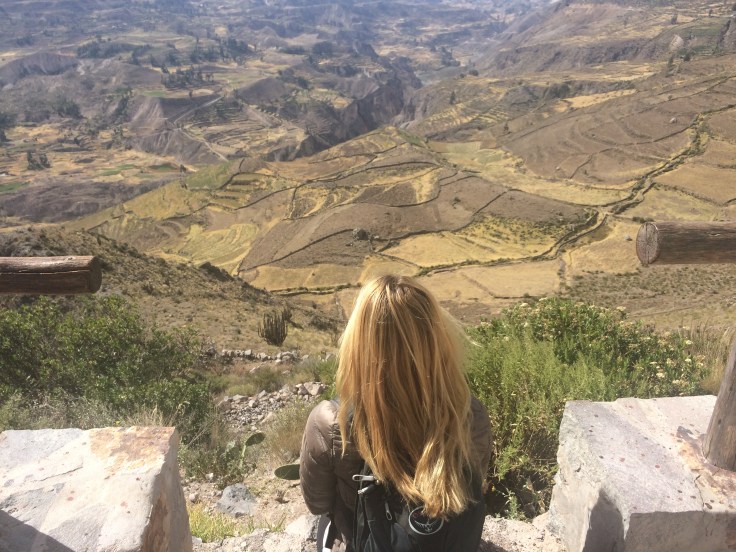
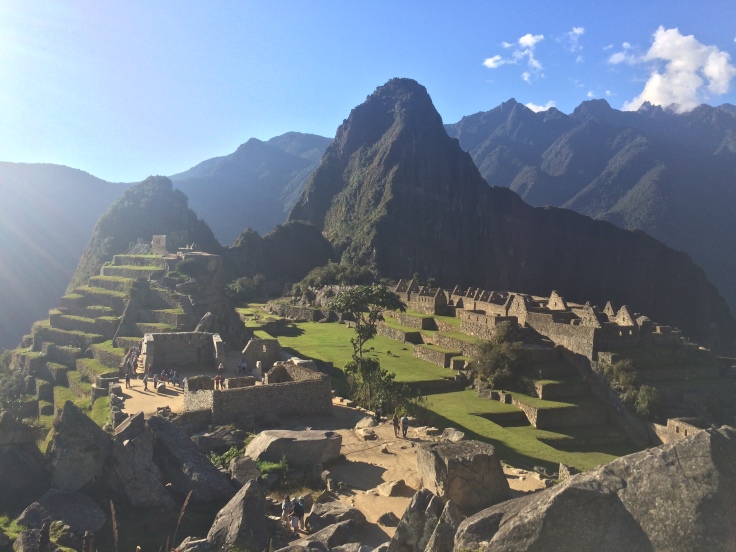

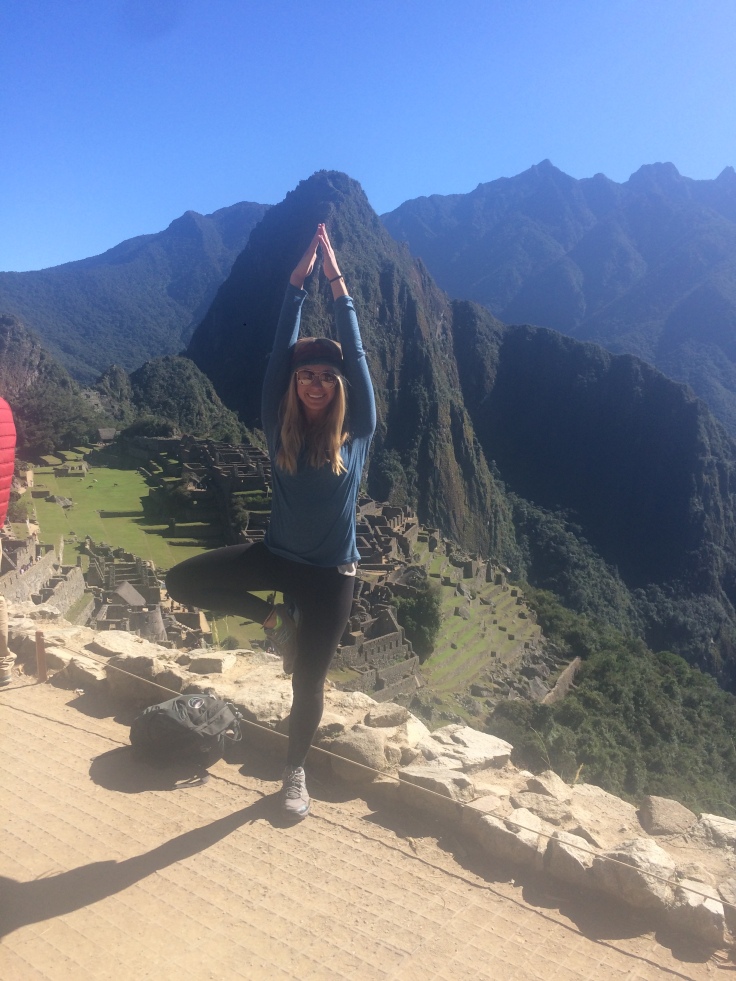

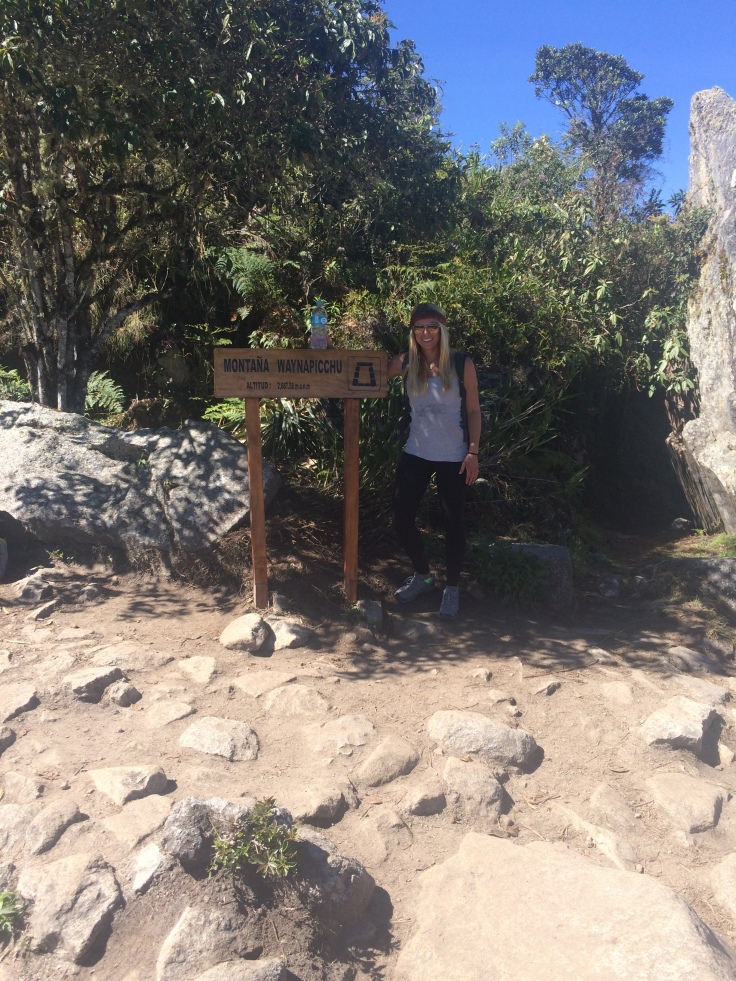


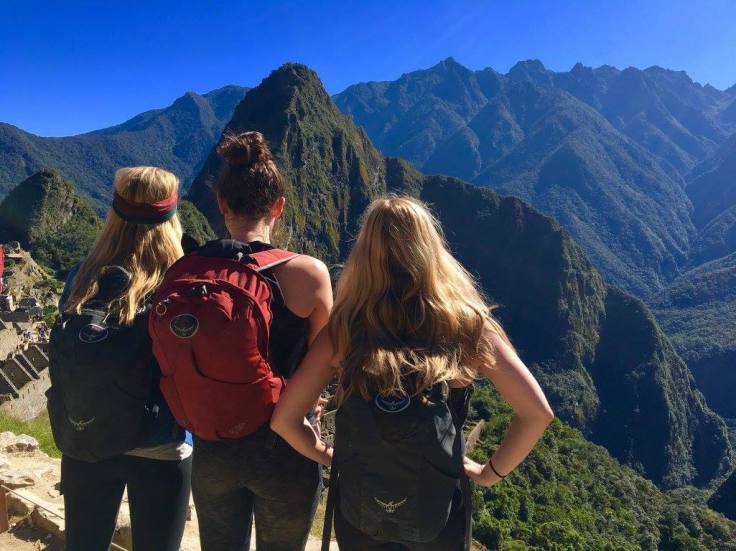
 After making my way back down (and almost dropping my iPhone off the side of the mountain…a very close call!), I met up with Sarah and Rachele for lunch. They wanted to leave early to head back to Aguas Calientes, but I chose to stay a bit longer at Machu Picchu. After re-entering the park, I soon found myself on the trail to Intipunku, or the Sun Gate. This was my favorite part of my time at Machu Picchu! This was the original gate into the sacred city from the outside world, and the trek up from the city was about an hour up. The views of the city below were absolutely amazing. I also met a nice Russian along the way who was about to quit the trek…but I convinced him to keep going!

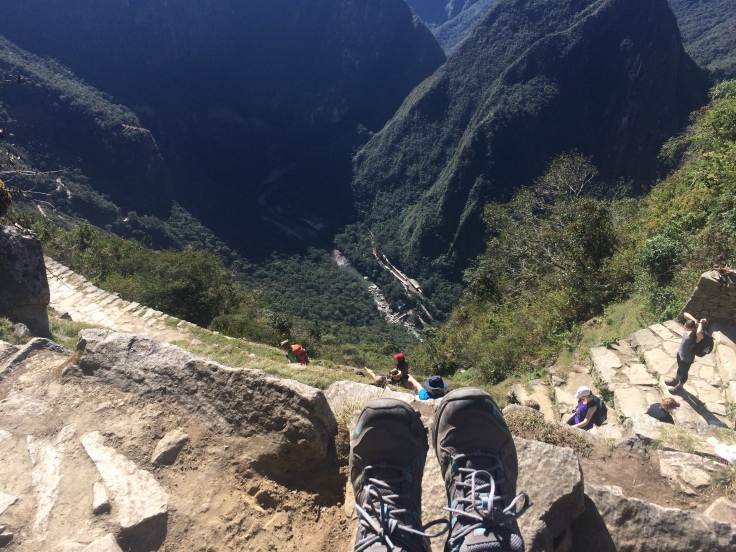

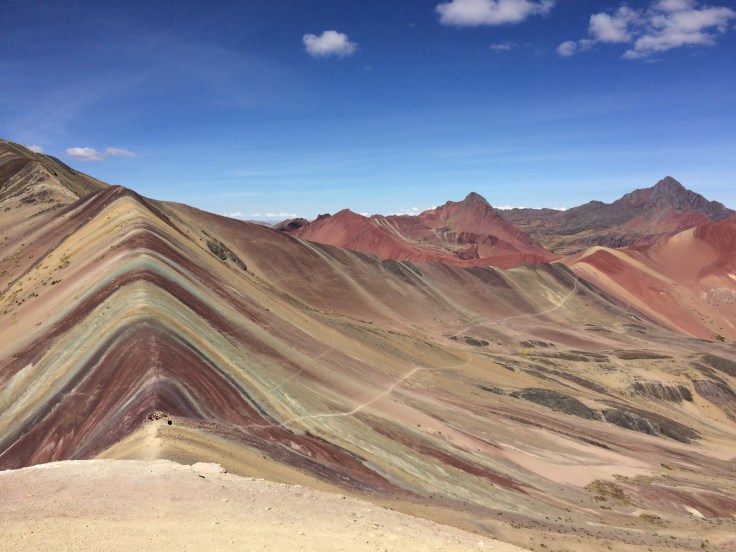

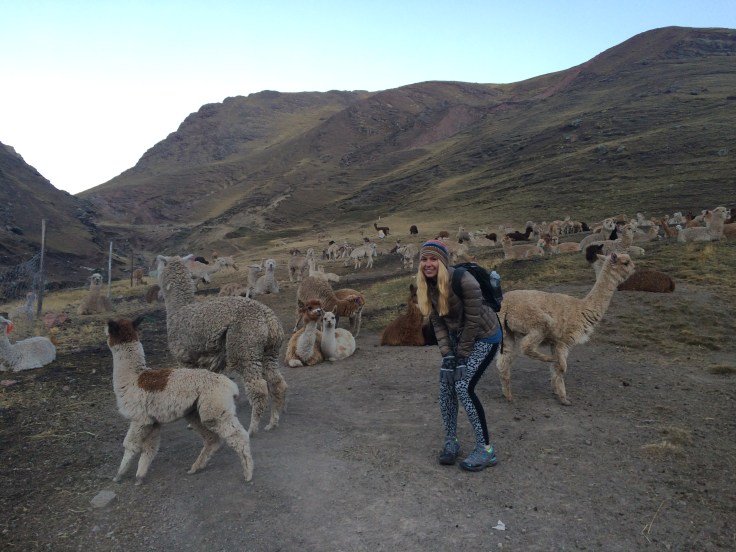
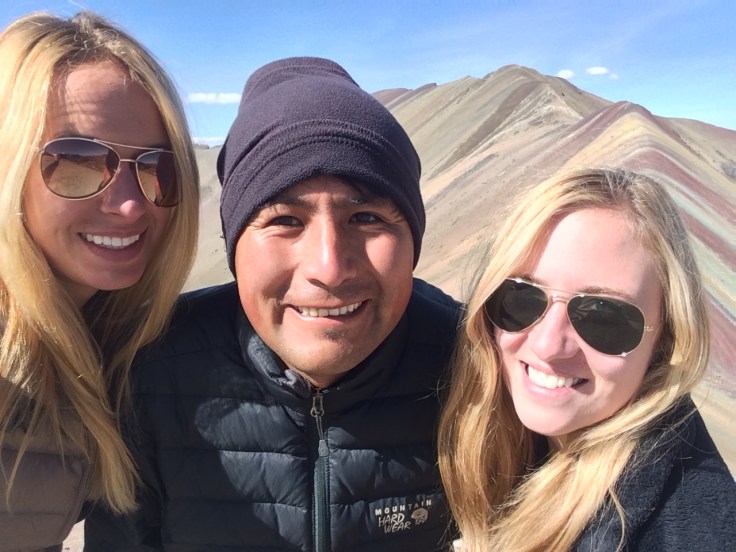

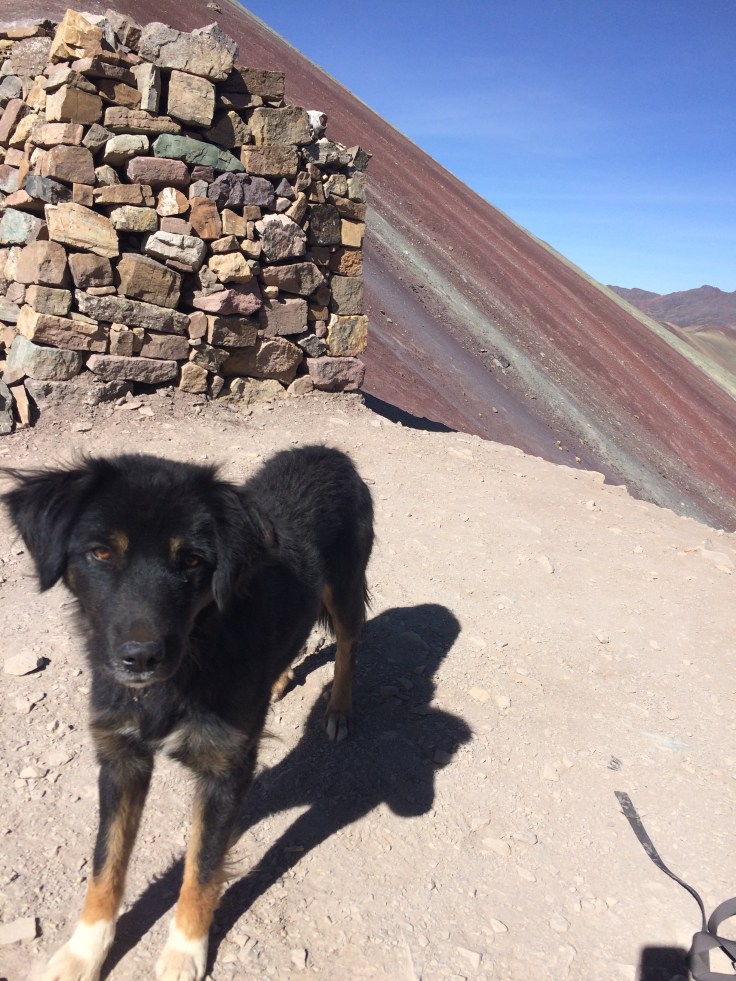
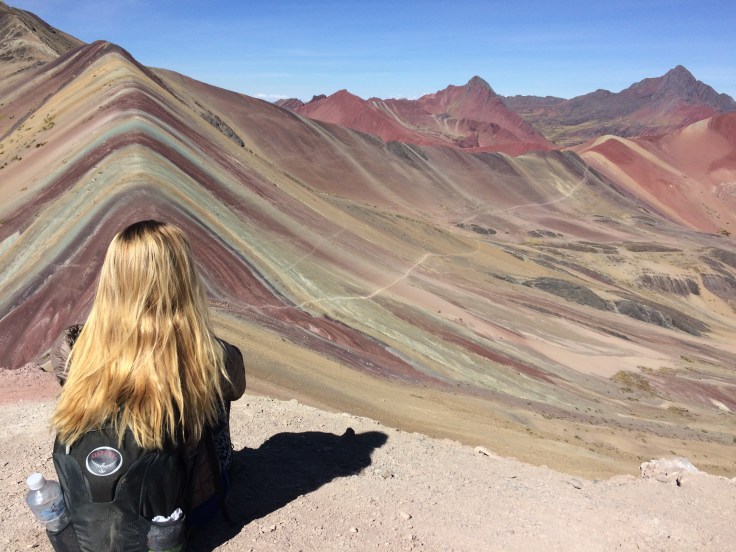
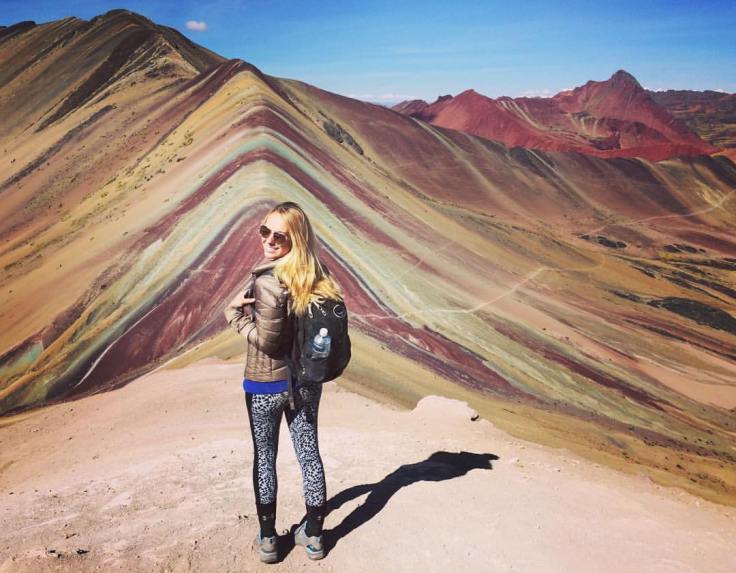
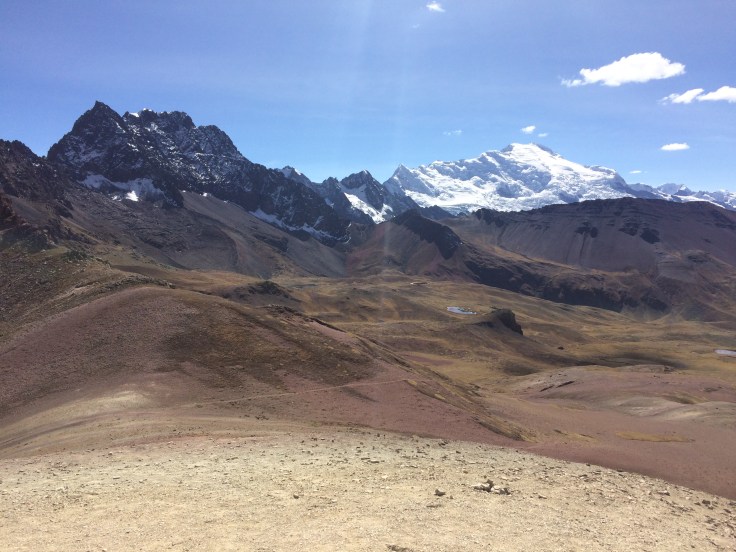
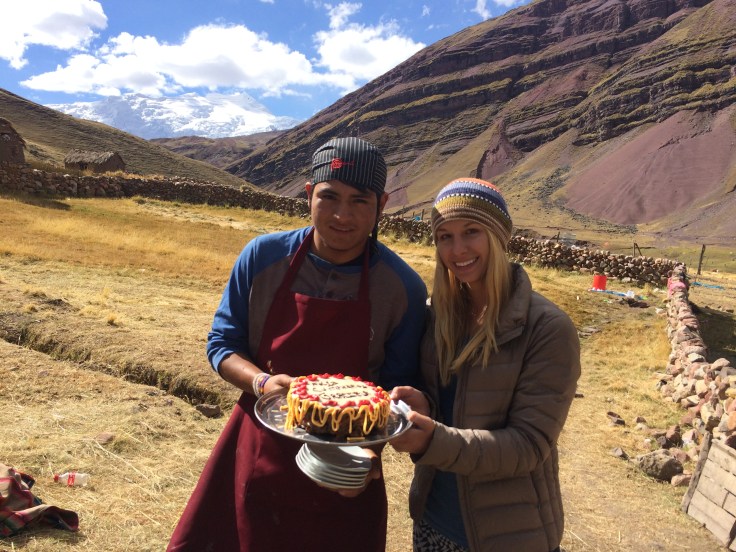
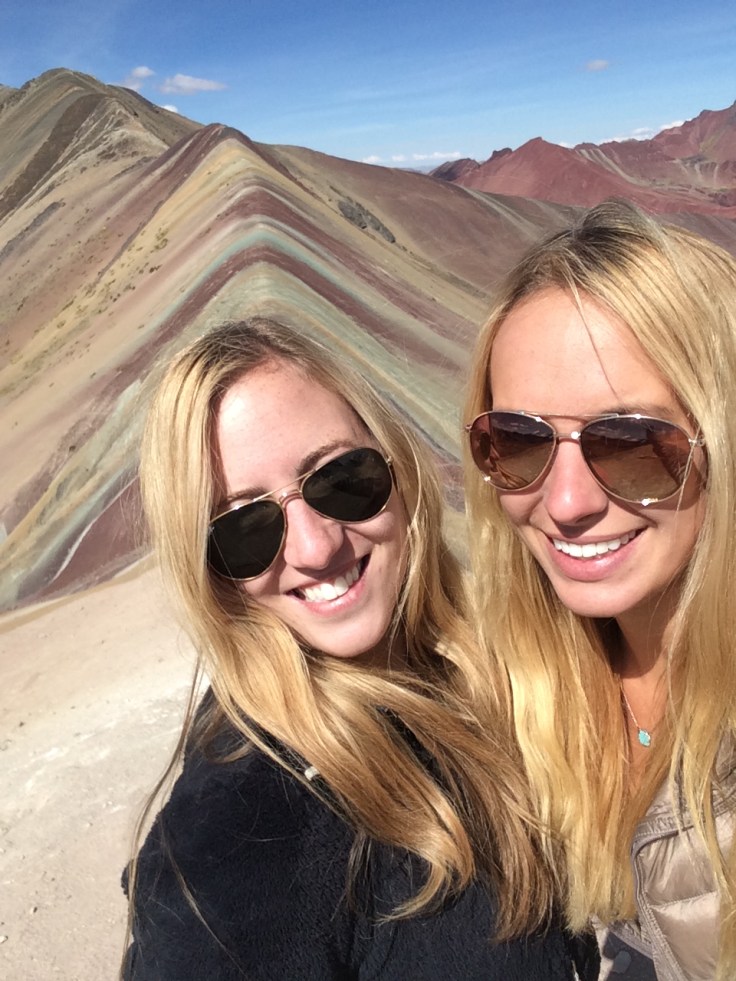 The altitude did not hit me until the trek downhill. We were well-stocked on natural supplements in the form of teas, pills, and candies to combat the altitude, but I think these items can only help so much. Somehow, the way down was much harder for me than the way up. Although I did encounter some shortness of breath on the trek up, I had a terrible headache and achy knees on the way down. Abel had some special liquid that he put on his hands for us to inhale that helped a bit. After what felt like forever, we were back at the base camp, where they prepared a huge lunch for us! Sadly, we were all feeling a little nauseated, so we didn’t eat a lot.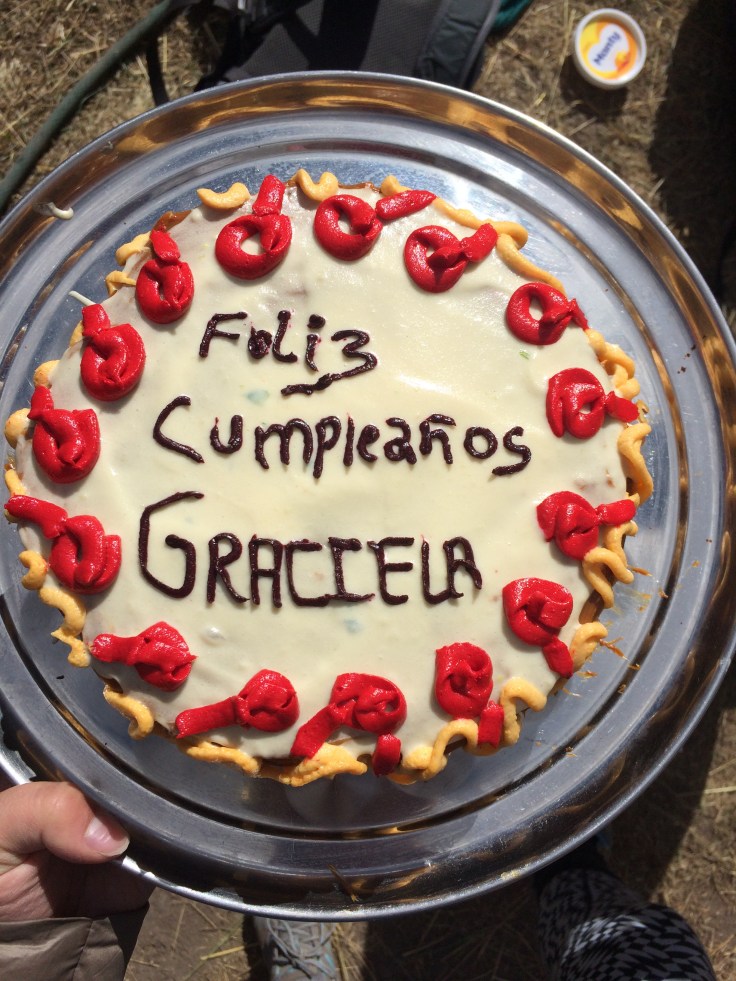

 a southern yankee abroad
Recent Comments