Search

a southern yankee abroad

Author

A Southern Yankee Abroad

Hi, I’m Gracie, a 27 year old New Yorker, native Alabamian, law student, and lover of travel. I’m excited to share my journey with you. I started this blog to encourage and inspire people to travel, no matter their age, background, or prior travel experience. I hope the information and stories I share will help readers travel with confidence and purpose. I also look forward to using this blog to share my thoughts about current events within the US and around the world in an effort to promote dialogue and understanding across the political spectrum.

Beauty Tips for the Female Backpacker

beyonce
Because we don’t all “wake up like this,” Beyonce!

Living out of a backpack for an extended period of time presents a special challenge for the beauty-conscious traveler. Below, I’ve listed a few tips to keep yourself looking great so you can focus on the beauty around you while exploring!


  1. Just mascara, lipstick, and a bronzer/blush go a long way. Depending on your destination, you may find it is easier to wear no makeup at all (I often have!). However, it is always nice to have a few staples on hand for those nights you want to doll up. When you have to pack everything you need for a few months in a backpack, space is very limited. Pick out the 2-3 essentials you truly depend on from your makeup kit, and leave the rest at home. For me, this is mascara, lipstick, and bronzer.
  2. If you straighten your hair regularly, consider getting a Brazilian keratin treatment. If you have hard to manage hair that reacts unpredictably to humidity (like me!), a Brazilian keratin treatment from a salon will do wonders. For me, the treatment completely eliminates the need for a blowdryer and straightener. Post-treatment, my hair air-dries in half the time and maintains a manageable texture, eliminating the need for a straightener! This is extremely helpful, considering space in my backpack is limited and a blowdryer and straightener would take up a good amount of room. Also, being able to shower and go without worrying about my hair saves so much time on the road, leaving more time for visiting with fellow adventurers and sightseeing! The treatment can be a bit on the pricey end (ranging from $80 to $300), but lasts for 3-6 months. Make sure you only use sulfate-free shampoo and conditioner to make it last longer. I like the Organix and Aveeno brands, often available in travel sizes at drugstores.
    10575379_10206454326009465_1573370545921369588_o
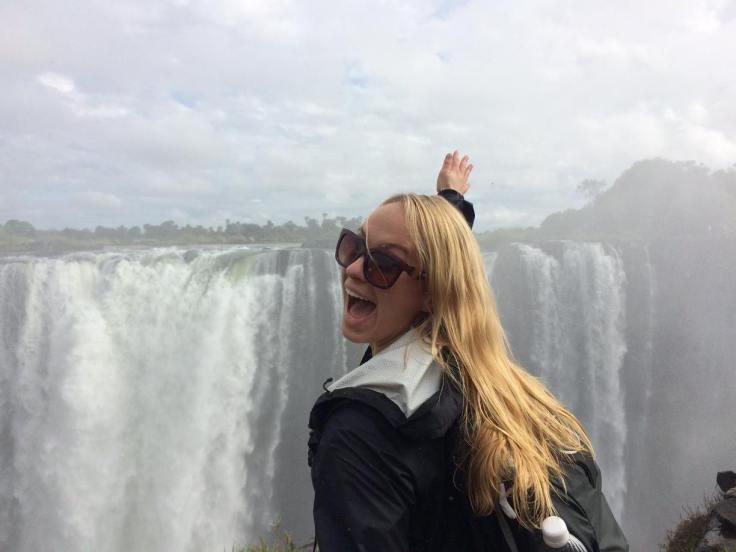
    Wet hair, don’t care! Victoria Falls, Zimbabwe


  3. If you must pack a straightener, purchase a mini-straightener. This will save a good bit of space! While I am not packing this for my summer travels, I love my trusty Mini Flat Iron from Sephora. If you absolutely cannot live without it, this tool will save a lot of room while packing.
  4. Dry shampoo and baby powder work miracles. In case you don’t have time to wash your hair between exploring all day and going out in the evening, a dry shampoo will add volume to your hair and give it a fresh look. I recommend Not Your Mother’s Clean Freak Dry Shampoo in an airline-approved travel size (pack a few cans!). This is available at most drugstores. Old-fashioned Johnson & Johnson Baby Powder applied at your roots provides the same benefits at a cheaper price.
  5. Use sunscreen with a minimum SPF 50. Even if you “don’t burn” (which is usually my case…until it isn’t!), you will when you’re exploring non-stop in the sun from dawn to dusk. I recommend Coppertone Sport in a travel size, which is waterproof (pack a few!). I prefer a lotion to a spray, as a spray can leave unsightly streaks if you are not extra careful when applying.

    12401917_10206454463212895_3437899525637827309_o
    The “bushman’s soap” (found in the bush of southern Africa) will provide instant soothing and healing to a severe sunburn. All you have to do is find the Devil’s Thorn plant in the bush and apply water!
  6. Pack a hat or two, as well as a Buff. Hats are great for keeping the sun off of your face and your hair in place in all weather conditions. I always pack a trusty baseball cap, a straw brimmed hat, and a Buff. A Buff is a convertible headband/bandana piece, and it’s great because you can wear it so many different ways! They also come in a variety of colors and patterns. I always keep one tied to my backpack just in case I need to get my hair under control at any given moment.
1491574_10206454379810810_7418525339833815599_o
I also highly recommend purchasing matching hats with your friends you make while traveling when possible!

7. Just let go and embrace the natural! I am someone who enjoys consistently wearing makeup in my regular everyday life. It makes me feel ladylike and put-together. As my grandmother says, if the barn needs painting, paint it! However, part of the beauty of traveling is just going with the flow. While in Africa, I did not wear makeup at all until the very end of the trip (and only because it was Christmas night, and we celebrated by dressing up and having a braai!) Not wearing makeup was truly a liberating experience, and I feel like I grew more comfortable in my own skin as a result. Stay focused on the experience, and your inner glow will provide all the beautification you need!

12401914_10206454478853286_774147362835564250_o
Embracing the makeup-free life while hiking in the beautiful Matopos, Zimbabwe!


How Affordable is Traveling Abroad?


10338680_10206454388371024_8528537077188326176_o“Travel is the one thing you buy that makes you richer.”
I could not agree more with this statement. Travel (along with education) is the most important investment you can make in your personal development.

But, let’s be real. Traveling is expensive. Once you decide to travel abroad, it helps to have a game plan in place to make the trip a reality. You do not have to have a trust fund or win the lottery to see the world! With some research, extra attention to spending habits, and patience, the world will be yours to see. Below are some of the tips and advice I’ve found to be helpful in the process.

Save, save, save! Once you decide upon a trip abroad as a goal, pay yourself to go. What do I mean? Take a close look at your budget (fixed costs v. discretionary spending). What can you live without? It is really as simple as deciding you can live without certain things, and setting the money you would otherwise spend aside. For example, as soon as I got back from Africa, I was so inspired to save money to travel more that I cut off my cable!

12440491_10206454453732658_2980490165912282033_o.jpg
There was no cable available in my tent in Africa, and I found out I was very happy to live without it!

Websites like Mint can even help you set savings goals for vacations, and track your contributions on a regular basis. Also, most tour companies like EF Tours and G Adventures will let you make payments on the cost of your trip starting several months in advance, instead of paying the amount in full. Once you decide to travel, treat the saving process like paying bills (except this is a fun bill that actually gives back to you!). Remember, tours are all-inclusive (sometimes even including flights to and from), so this can be helpful if you want to work with a hard figure for your savings plan.

If you’re in college, study abroad! Often, financial aid packages will cover the costs of tuition and room and board expenses for study abroad, and living in a foreign country can be equal to (if you’re careful) or less than living in the US. My one regret from college was not pursuing a study abroad opportunity. All my friends who did it says it was a life-changing experience. At least visit the travel abroad office to investigate your options. It never hurts to ask!

Be on the lookout for flight deals. Flying is not as expensive as you’d think it might be! The growth of low-cost airlines has been a boon for budget-minded travelers, especially in Europe where they’ve been around a while.

I use Kayak to search for flight deals. It is a “metasearch” engine that searches for good deals across multiple search engines, so it’s better than just using Expedia or Priceline. It also includes a lot of deals from low cost airline providers.  You are more likely to find a good deal on a flight if you can be flexible with your schedule (I recommend using the “flexible dates” function to compare prices across a range of workable departure and return dates). I also really like using Skypicker. Often, their results will show up in a Kayak search, but sometimes I like cross-checking against their website just in case (just be careful, because all Skypicker sales are final!)

For my upcoming long-term summer travel, I’ve managed to lock in my intercontinental flights (US to Asia to South America to Europe to US) for a much cheaper rate using Kayak/Skypicker than I found when searching for an around the world (“RTW”) flight ticket. However, this type of ticket may be sensible for you if you have a firm schedule for long-term travel. I highly recommend doing your research on Kayak and comparing it to RTW ticket prices you find on Airtreks.

Tip: I have no idea if it is true or if it is just me being superstitious, but I always search Kayak in “incognito mode” on Google Chrome, so as not to inflate prices on multiple searches. Maybe it is me being silly…but passing along, just in case!

Be as flexible as possible. As mentioned above, be flexible with your dates as much as you can be when searching flights by departure and return date (for example, it is often cheaper to leave on a Wednesday than a Friday). Also, be flexible with your airport of departure if you can. For example, searching a round trip ticket from Atlanta to London yields a price $910, while searching a round trip ticket from Birmingham, AL to London shows a price of $1,625…big difference!

Track “small” expenses. Something as basic as your passport will cost you $30, which is important to keep in mind as these small but critical expenses add up. Some countries will charge you for a visa to enter (anywhere from 35 USD for Zimbabwe to 80 USD for Vietnam to 135 USD for Bolivia), but many if not all European countries and some South American countries will grant US citizens a free visa for a period of time, usually less than 90 days.

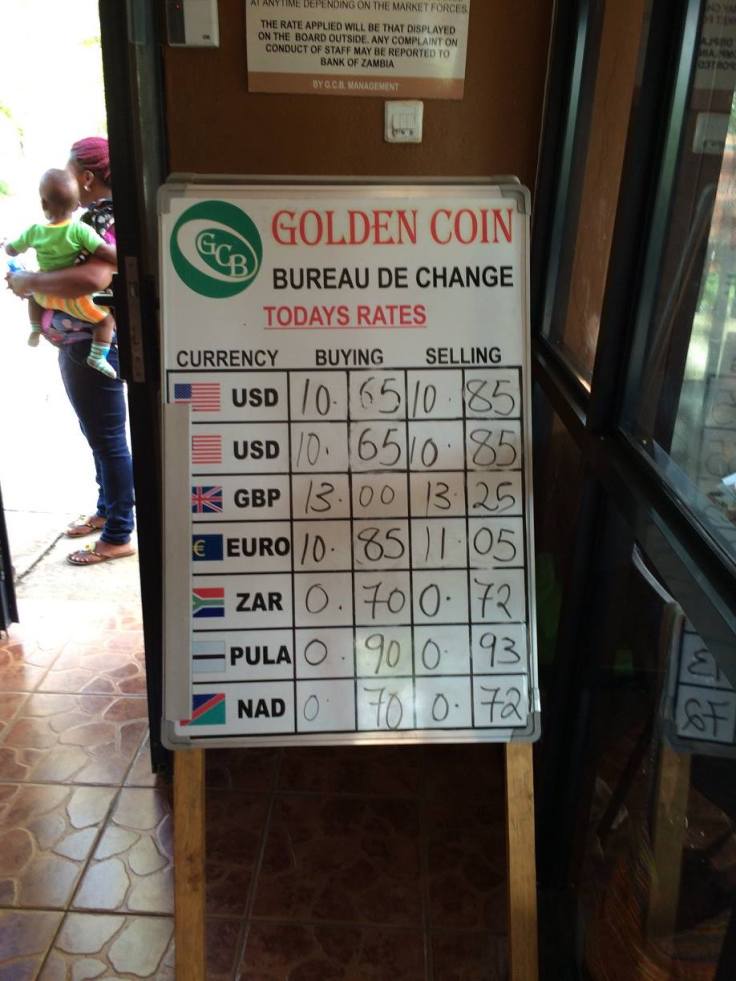
Try to avoid foreign transaction fees and currency exchange rates. Keep an eye on foreign transaction fees as you book transportation and accommodation overseas in advance, as well as when you use your credit card abroad. It is best to try to open a checking account with Charles Schwab (reimburses ATM fees) or obtain a credit card with no foreign transaction fee, such as a Chase Sapphire or Capital One card. Bank of America charges a 3% foreign transaction fee for each purchase made outside of the U.S. or Mexico…ouch! Try to use ATMs instead of currency exchange kiosks once abroad, as they will charge you exorbitant rates. You can usually order currencies from your bank ahead of your departure for a much lower rate.

1015989_10206454314129168_7568101218244329550_o
Beware of foreign transaction fees and currency exchange kiosks!

Stay in hostels. This advice is especially true if you’re young and single (yeah!), but I’ve also found some family-friendly hostels in my search process. Hostels provide dorm-like conditions for the budget-minded traveler at costs as low as $8/night (this is what I am paying each night in Chiang Mai before I meet with my tour group in Bangkok). The trick is to make sure you reserve a hostel with a reputation for being clean and safe, as well as one that provides extra perks like free wifi, free breakfast, and a washing machine. I used Hostelword as well as word of mouth from friends when planning my hostel stays for this summer. Hostelworld features good, detailed reviews for each hostel. I also like their “flexible booking” system, meaning you can pay an extra $1 to receive a credit back on your deposit to use for another reservation should you cancel or change your reservation. This has proven very handy, as my plans have already fluctuated multiple times even a few months out!

man in seat 61
The Man in Seat 61…he’s awesome!

Research the train system. I’m actually very excited for this tip, as I have yet to master the rail system in Europe (I’ve heard it’s great though!). While I am using low-cost airlines for some travel within Europe, I will be using the train for much of my travels. I recommend crunching the numbers to see if it is more cost-effective for you to buy a Eurail pass, or just buy tickets as you go. For me, I will just be buying tickets as I go along. The point is…don’t assume a “pass” is the cheapest option! Visit The Man in Seat 61 for awesome advice regarding train travel.

Enjoy and appreciate destinations closer to home. In the meantime, enjoy your home and the surrounding area as a destination! I’ve met plenty of people on my travels who have never visited the US, so take time to appreciate what is unique about the place around you. When it comes down to it, we all live in and are from a great travel destination…so own it!

463186_3348776390738_997649472_o (1)
I love being a tourist wherever I live! This shot is from Memphis, Tennessee when I lived there a few years ago.

I hope my tips have helped you realize traveling can become a reality with some planning ahead. Do you have any additional tips or questions about saving money to travel abroad?

1412316_10206454434412175_9145266318501591017_o
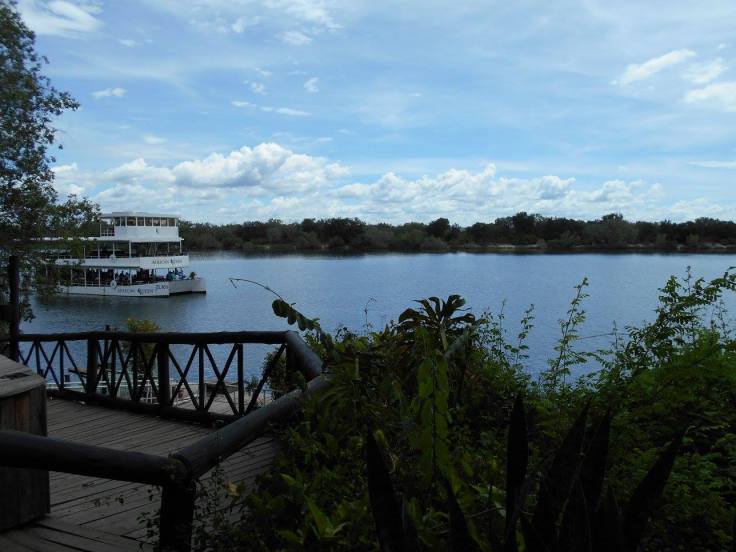
A riverboat on the Zambezi in Zambia, which reminded me of Memphis!


Johannesburg, South Africa: The Somber History of Apartheid

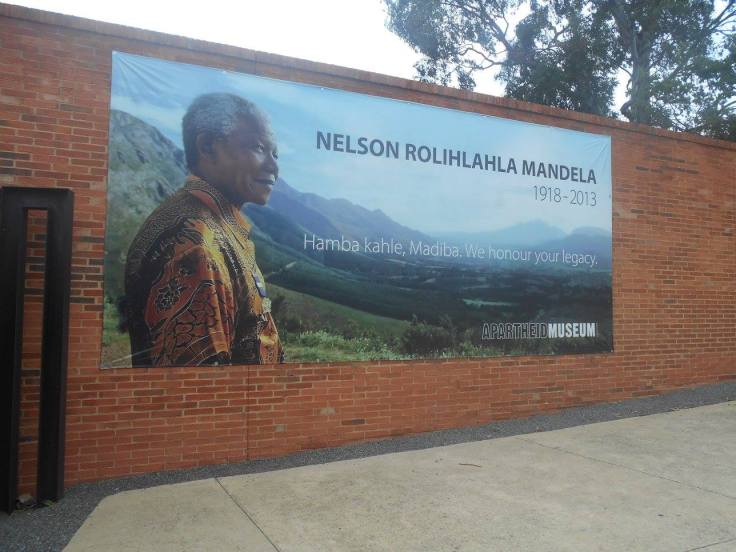
1404816_10206454516374224_4149021129424623718_oMy visit to South Africa last December included a visit to the Apartheid Museum in Johannesburg. I went in with a general understanding of apartheid as a system of institutionalized racial segregation in South Africa in the late 20th century, mostly gleaned from brief overviews in a high school history class. However, I quickly realized how much more there was to learn from this painful chapter in history. The Apartheid Museum serves as a reminder that the struggle for equality still exists, in South Africa and around the world.

Below are a few facts I learned for the first time during the visit.

-Apartheid permeated every detail of a person’s existence. Each citizen was legally classified as white, black, Indian, or “coloured,” and was required to carry an identification card denoting this. This classification affected details as small as what alcohol you were allowed to drink (black people had to drink the lower quality “Bantu beer” as mandated by the government) and as big as where you could live (3.5 million black South Africans were removed from their homes and forced into segregated neighborhoods over the course of 2 decades).

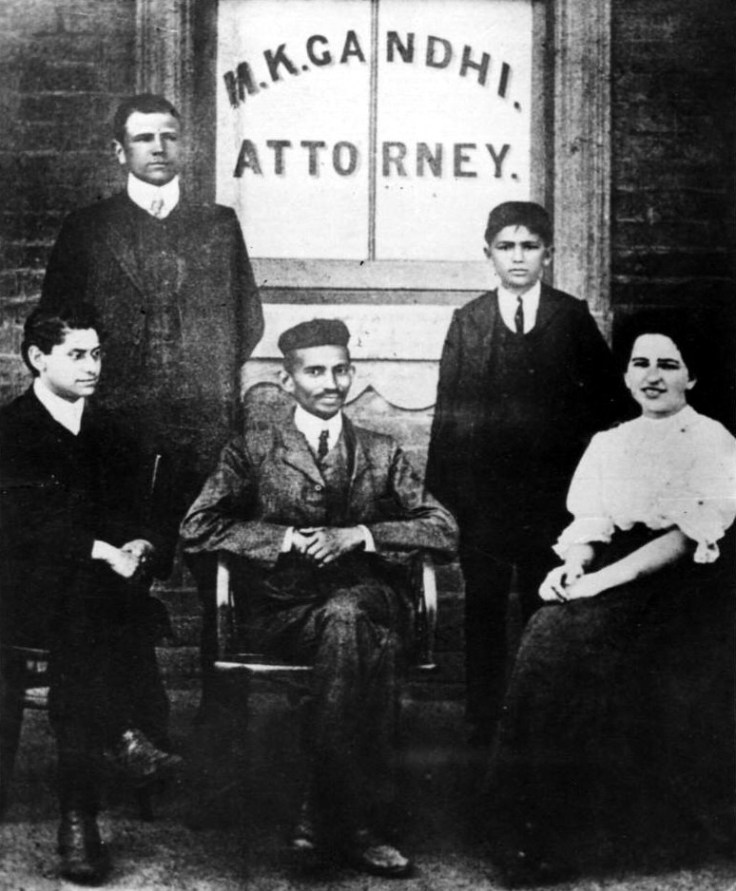
-Mahatma Gandhi lived in South Africa early in his life, and was a victim of the discrimination that served as a precursor to the apartheid system. In 1893, Gandhi purchased a first-class ticket for a train traveling from Pretoria. A white passenger complained about sharing the car with Gandhi, and Gandhi was forcibly removed after refusing to move to third-class. Gandhi became active in fighting discrimination in South Africa, and called this incident among the most important in his political career. Gandhi continued his work in South Africa until 1914, when he returned to India as Mahatma, meaning “a great soul.”

Gandhi_Johannesburg_1905
Gandhi as a young lawyer in Johannesburg, c. 1905

-The Soweto Uprising of 1976 saw schoolchildren, some as young as 13, come together to protest inequality in the education system. Essentially, the government led by the pro-apartheid National Party passed a law mandating all children be educated in the Afrikaans language. However, black South Africans spoke English. As Desmond Tutu said at the time, black South Africans viewed Afrikaans as “the language of the oppressor.” Can you imagine going to school and trying to learn math, history, and language in a language that was completely foreign to you, in your home country? This was exactly the problem faced by black South African students and teachers, who were now forced by law to communicate in Afrikaans only with English-speaking students. (It probably goes without mentioning, but the schools themselves were completely segregated along racial lines, and the black schools received much less funding.)

The students stood up for their right to an equal education. On June 16, 1976, 20,000 students and protesters marched in the streets and were met with violent backlash from the South African military, who used machine guns, dogs, and stoning to attack. It is estimated up to 700 protesters died during the uprising. June 16 is now Youth Day in South Africa, to honor the memory of these protesters.

As a former teacher of high school students, learning about the Soweto uprising shook me at my core. What are we doing in the US to fight for all students to have an excellent education? How are we empowering youth to stand up for their rights without fear of repercussion?

soweto
Schoolchildren protest oppression in education, Soweto Youth Uprising, 1976

-The “toyi toyi” dance/military march was adopted as a symbol of protest and unity among black South Africans after the 1976 massacre. The museum had several very moving video clips of the toyi toyi used in protest. I’ve included one from You Tube below. Although this is fake footage from a movie, it can give you an idea how powerful it was to see actual video footage of this.

Toyi Toyi as protest to apartheid in South Africa

-Nelson Mandela was released as a political prisoner on February 11, 1990 after 27 years of confinement, much of it in solitary confinement. While this is a pretty widely known fact, it still blew my mind to be reminded that this happened during my lifetime (I was 8 months old and in diapers when he was released!).

1271071_10206454381770859_2216464065146283832_o
The South African flag was redesigned and adopted in 1994 to represent unity in a post-apartheid era.

-My tour included a visit to the Soweto neighborhood (a syllabic acronym for Southwest Township), where hundreds of thousands of black South Africans were forced to move after being forcibly removed from their original homes during apartheid. This is separate from the visit to the Apartheid Museum, but my hotel was able to arrange both tours and provide transportation. This neighborhood features the only street in the world with the addresses of two Nobel Peace Prize winners—Nelson Mandela and Desmond Tutu.


My visits to the Apartheid Museum and to the Soweto neighborhood were informative, inspiring, and humbling. I highly recommend the tours if you find yourself in Johannesburg.


To Tour or Not to Tour: Planning the First Solo Trip


10516789_10202918749142253_2413058596981065031_n
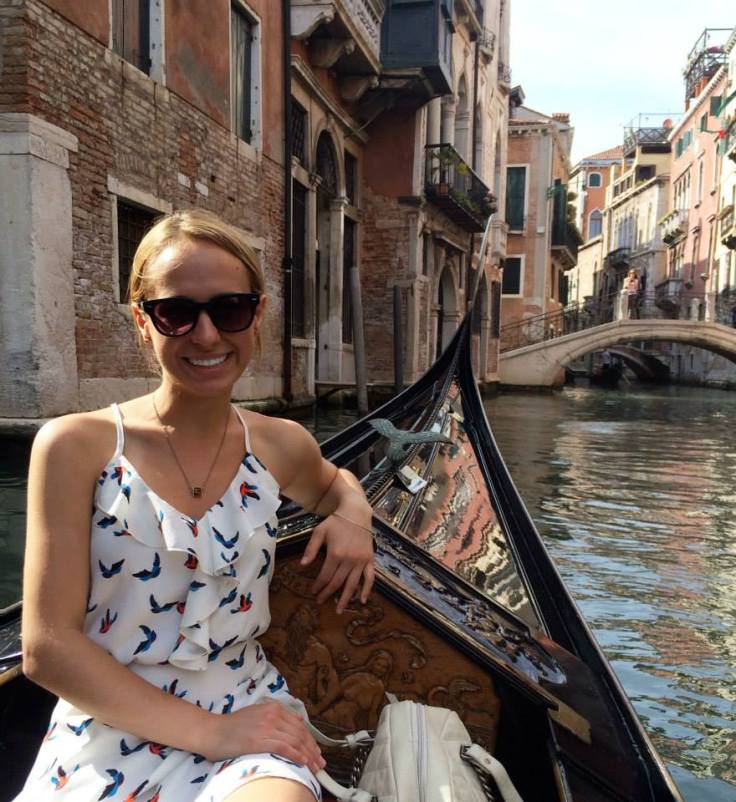
“Sailing ’round the world in a dirty gondola…” – The Band

Going abroad for the first time can be a daunting experience, especially when you’re traveling solo. However, if you have no one else who can travel with you at that time, it may be the only option you have. I have traveled alone on both trips to Italy and Africa. When I left the comfort and familiarity of NYC to board the flight to Italy alone almost 2 years ago, I was practically shaking with anxiety. However, as soon as I arrived in Rome, it took almost no time to realize that living independently in NYC for nearly 1 year had more than prepared me for the streets of Italy’s most fantastic cities!

If you are traveling abroad for the first time solo, meeting with a tour group may help alleviate some nervousness. However, depending on your destination, you may be able to self-plan your trip to cut costs and fit in more of what you want to see and do without having to cooperate with a strict group schedule.

For my first trip abroad to Italy, I was scheduled to meet up with a good friend I had taught high school with in Memphis, as well as one of her friends from college. My friend had arranged for the 3 of us to travel with EF Tours, with the majority of our group being from the Memphis area. I would fly solo from NYC to Rome to meet my friend and the group there. Given my lack of experience in foreign travel, I willingly agreed to this plan…at that time, I did not know the first thing about planning a trip in Italy! However, my friend had to drop out of the trip just a few days before our departure due to family circumstances, and I found myself traveling across Italy with a group of relative strangers. I grew to enjoy the company of the group, but often found myself splitting off to see more sights at my own pace.

10502229_10202918744982149_5921419709842824085_n
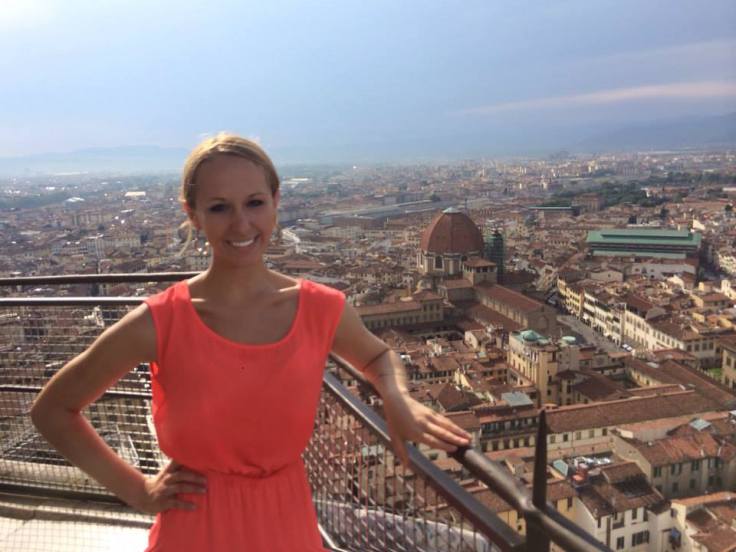
Climbing the Duomo in Florence, a solo feat! Not for the claustrophobic…

There were both pros and cons to using an organized tour company for my first solo trip:

Pros:

  • I knew I had a group waiting on me in Rome and expecting my arrival. This was reassuring, just in case the unforeseen happened!
  • Pre-arranged transport and accommodations between all the major cities on our agenda (Rome, Florence, Venice) as well as some less-visited towns (Assisi, Spoleto, Bologna) proved extremely convenient.
10463014_10202918751942323_2346374835723873439_n
Basilica of San Francesco d’Assisi…a beautiful and moving visit I may not have made if I were traveling completely solo, since it’s a little off the beaten path! This painting spells “peace” in every language.
  • Several accommodations were outside of the main cities, meaning I was able to see a different side of Italy that was less touristy. For example, dancing with these nuns we stayed with outside of Venice was definitely a highlight of the trip! They also served very good wine. You can visit their website here.

Cons:

  • Several accommodations were outside of the main cities, so I felt like I had less time than I desired in places like Rome and Florence.
  • The tour ran on a very strict schedule! There was little time for wandering on my own (although, I sometimes created this for myself by splitting off from the group when I knew there was something else I wanted to see or do).
  • Once I got the hang of being in a foreign country after the first few days, I realized I could have planned the entire trip on my own, cut down on costs by staying in hostels and traveling by train, and seen more of the sights I wanted to see!
  • Most of the meals were pre-arranged, which was a real bummer. Although it was included in the tour price (wine was always extra though), this did not allow me the opportunity or freedom to explore as many restaurants as I wanted. I feel like I need to go back to Italy to experience more authentic dining!

All things considered, I still booked my trip to Africa last winter through a tour company. This time, I used G Adventures, based on a friend’s recommendation (thanks DJ!). Even though I was much more comfortable with the idea of solo travel at this point, G Adventures (contracted through Indaba Explorations) provided the overland vehicle for transport, camping equipment, and meals cooked over the campfire each night, making it a sensible decision. This time around, I actually thoroughly enjoyed being in a tour group—everyone was in the 23-35 age range, we had amazing local guides (shout out to Joslin and Francois!), and there was plenty of free time (when we weren’t on an organized safari of course). More on how much I loved my Africa travel group later 🙂

10321567_10206454456172719_173175358309356374_o
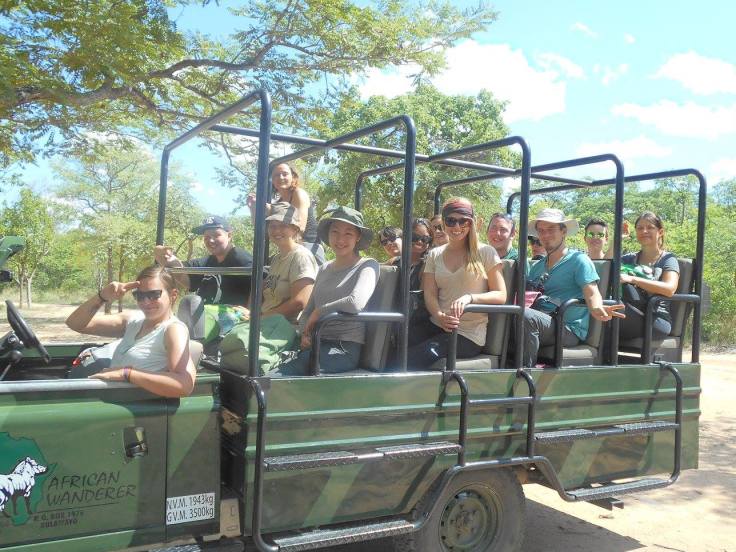
On safari with new friends in Zimbabwe

This summer, I will be using G Adventures again as I travel through Southeast Asia. However, I will be backpacking in South America with a good friend from NYC, and taking on Europe completely solo for 7 weeks (I will share more on my itinerary later)!!

Have you ever used a tour group for solo travel? If so, what was your experience like?

Why Travel? Better Late than Never!

Hello, blogosphere! Thanks for taking the time to visit my page. I thought I’d write my inaugural post about my background and why traveling is so important to me at this stage in my life.

I did not leave the United States until I was 24 years old. I used to be so embarrassed of this fact, but I am certainly not anymore. In fact, I hope my story can inspire those of you out there who may be looking to travel abroad for the first time, but are just not sure where to start.

Since I was little, I wanted to be an astronaut. I know every little kid wants to be an astronaut, but I was so serious about it! I read every book I could find about space and space travel, and used my telescope in the backyard on a regular basis. I even begged my parents for family trips to visit the NASA Marshall Space Flight Center and Cape Canaveral (thanks Mom and Dad)! In high school, I began to realize being an astronaut was not the most realistic of careers, and began to focus on other interests. However, I think the deep desire to explore and seek adventure stuck with me.

In my college years, I was surrounded by friends and classmates who were much more well-traveled than I was, and I began to feel ashamed of how little of the world I had seen. I definitely did not have the funds to start traveling then, and I certainly lacked the confidence as well. I thought I could only travel abroad if I had a companion, and the scheduling and funds never really lined up. So, I tabled my travel dreams for another few years.

I moved to NYC in 2013 to start a career in finance. The around-the-clock nature of my work did not leave me with much time to reflect and plan for a trip abroad. Also, I began dating someone soon after moving to the city, which took a lot of my time and focus (in a positive way!). Career, check! Boyfriend, check! Living in a fabulous city, check! Then, New Year’s Eve 2014 changed everything. My purse was stolen at a club in Soho. My driver’s license, along with my phone and credit cards, was gone. Panic ensued, as I was supposed to fly home to Alabama for a friend’s wedding the next week! My then-boyfriend pointed out, “Why don’t you just use your passport to get on the plane?” I broke down sobbing, and confessed, “I don’t own a passport!”

At that moment, my priorities shifted and my lifelong dream of adventure came into sharp relief. I knew it was time to travel abroad, even if it meant going alone and using a big chunk of savings. Within the next few weeks, I had applied for my passport and booked a trip to Italy. My then-boyfriend was in med school and could not go with me. However, I was finally confident enough to pursue my dream alone.

1535705_10202918716141428_8255690329216990467_n (1)
My first morning abroad EVER! In Santa Marinella, Italy.

Since Italy, I have traveled in Africa and Mexico, and this summer I will be taking 3 months to travel through Southeast Asia, South America, and Europe. I hope to use this blog as a place to share my ups and downs, funny stories, and observations. I also hope to use it as a place to reflect. Lastly, I want to use this blog to encourage others to travel by sharing how I’ve overcome obstacles in my past to pursue this dream.

Before I leave in May, I’ll be sharing about past trips, both abroad and within the USA. I’ll also share about the planning and packing process. Please feel free to reach out via comments or email!

Blog at WordPress.com.

Up ↑